C1261
DTC C1261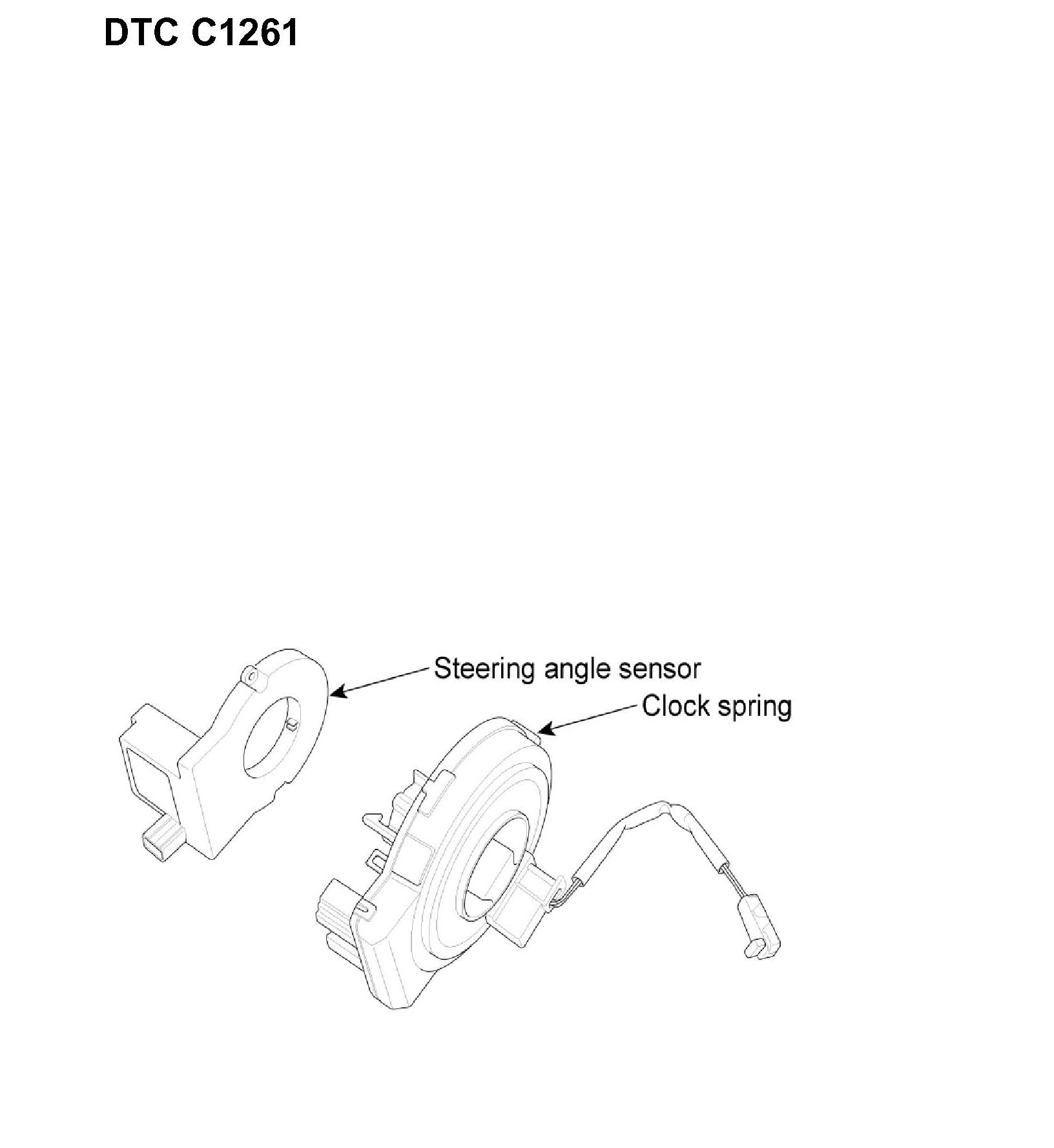
GENERAL DESCRIPTION
The Steering angle sensor (SAS) is composed of main gear, serve gear 1 and serve gear 2 to determine the turning direction. The SAS is a CAN communication type sensor. If main gear is rotated according to the rotation of steering wheel serve gear 1 and serve gear 2, which is contact with main gear, will be rotated. The HECU detects the absolute angle by using magnetic MR effect and the difference gear ratio of each serve gear and then send to the CAN communication line. The HECU detects the steering wheel's operating speed and operating angle by using absolute angle, and this signal is used in a input signal of anti-roll control.
DTC DESCRIPTION
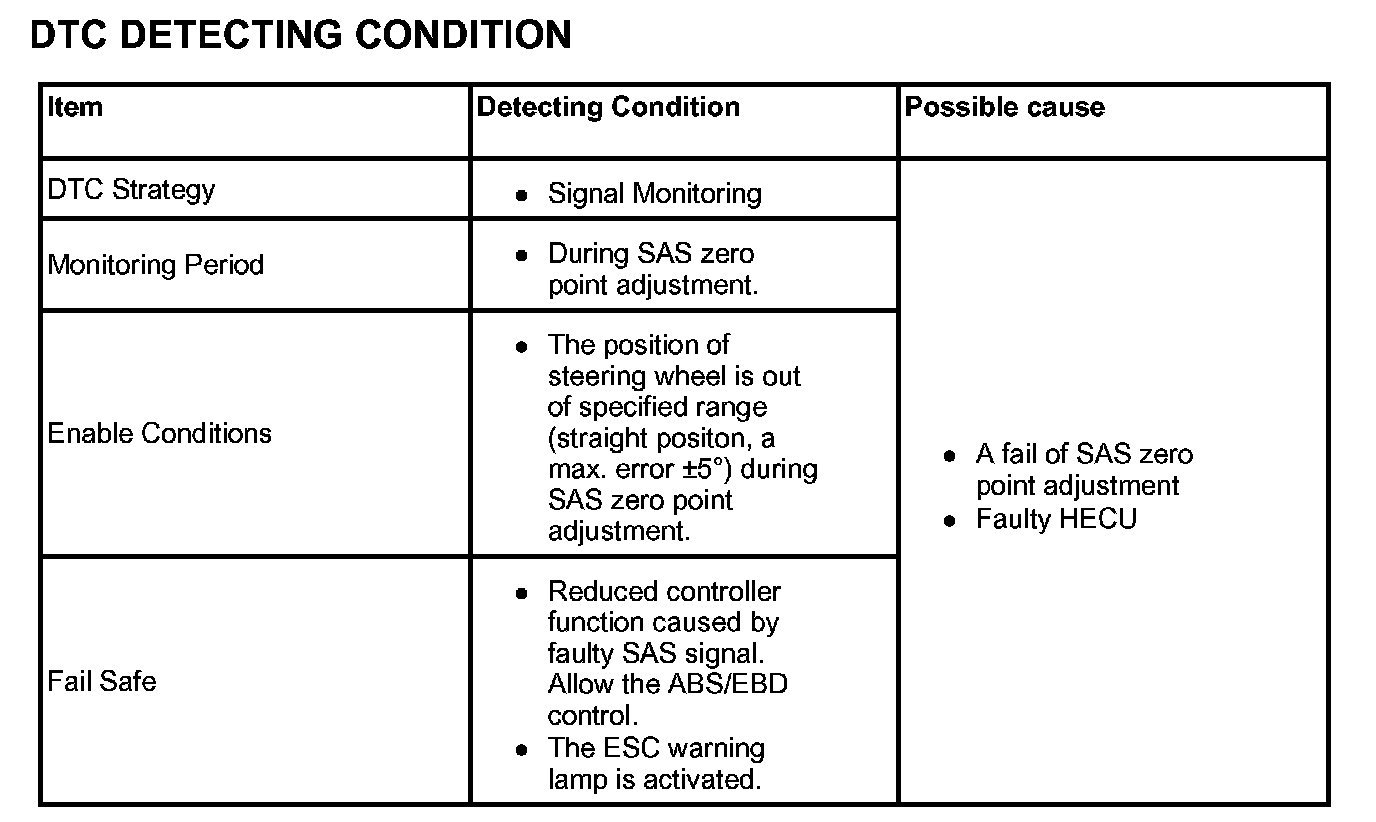
The SAS used for ESC control needs zero point adjustment because the SAS measures a absolute angle. Zero point adjustment is done by using the Scantool device. If abnormal zero point adjustment is detected, a failure is recognized.
DTC DETECTING CONDITION:
MONITOR SCANTOOL DATA
1. Connect Scantool to Data Link Connector (DLC).
2. Ignition "ON" & Engine "ON".
3. Turn the steering wheel to the left or right until you can't turn the steering wheel any more.
4. Monitor the "steering sensor" parameters on the Scantool.
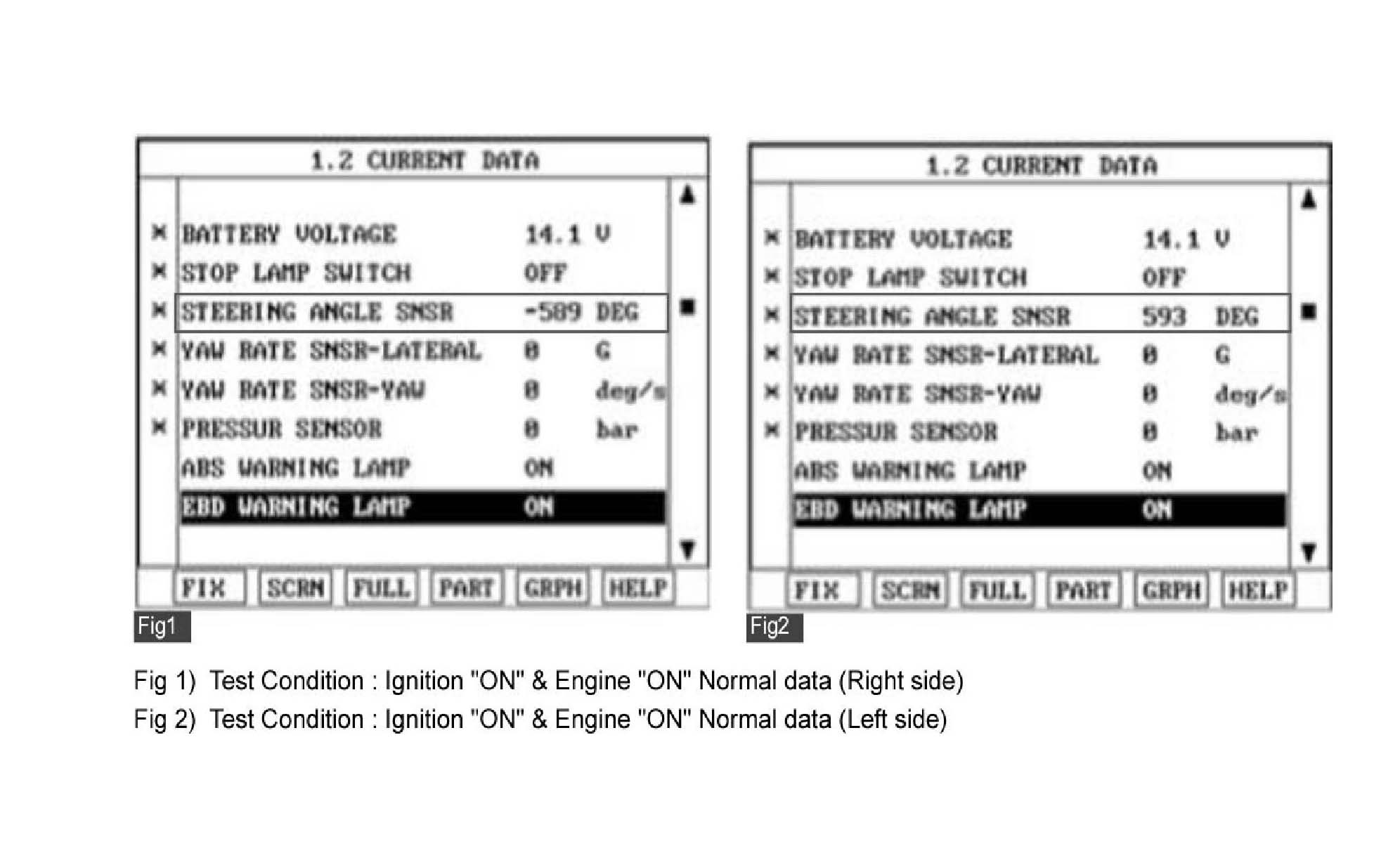
5. Is parameter displayed within specifications?
YES
Fault is caused by having been repaired and HECU memory was not cleared. Clear the DTC and then go to "Verification of Vehicle Repair" procedure.
NO
Go to "Component Inspection" procedure.
COMPONENT INSPECTION
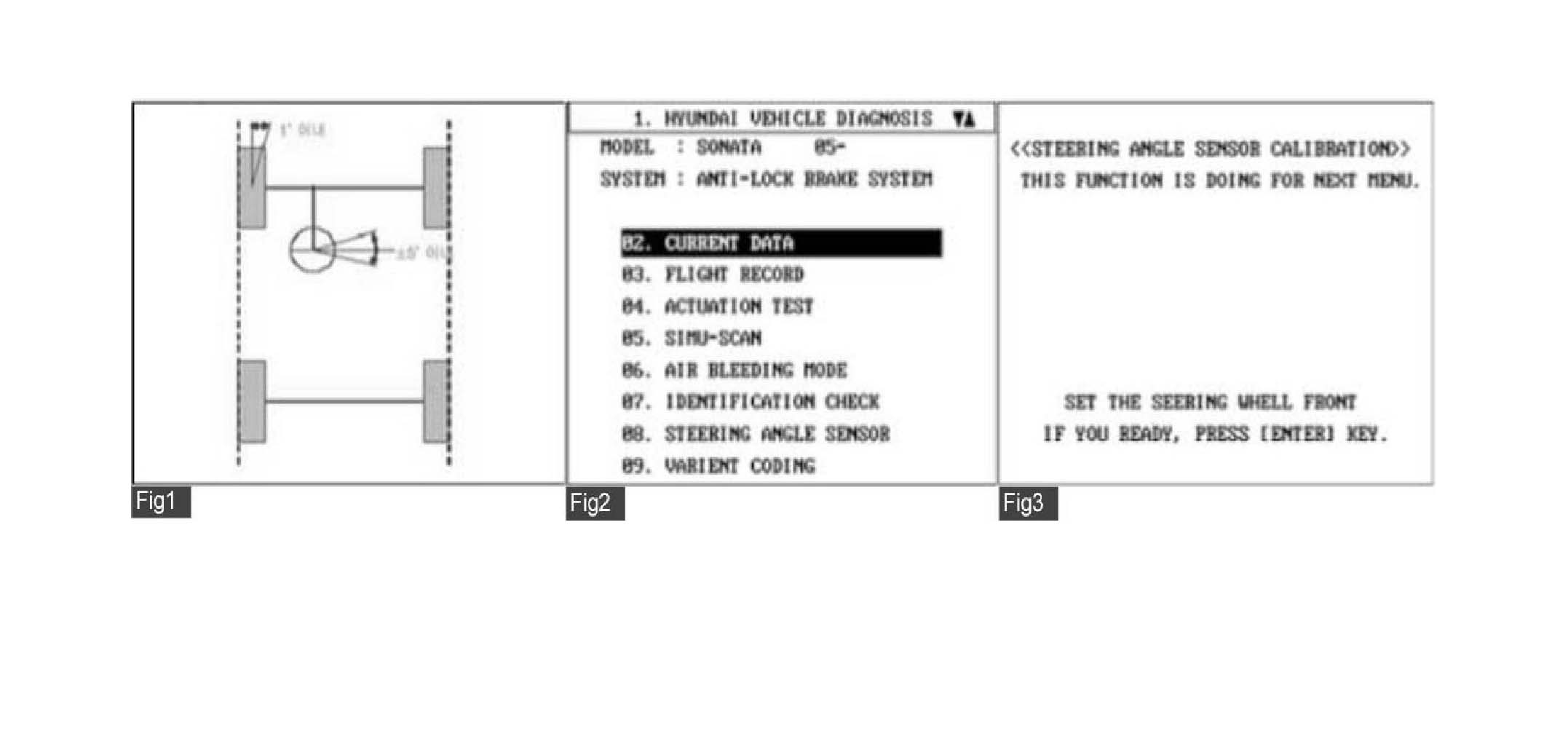
1. Line up wheels like (figure 1).
A. Perform the wheel alignment.
B. Line up the steering wheel in a straight line.
C. Drive vehicle ahead and back 2-3 times without holding steering wheel.
2. Connect Scantool to Data Link Connector (DLC).
3. Go in Anti-Lock brake system. (figure 2).
4. Perform steering angle sensor calibration. (figure 3).
5. Disconnect Scantool.
6. Check the condition of SAS zero point adjustment by operating the vehicle (turn right and left at least 1 time)
7. Is zero point adjustment completed?
YES
Go to "Verification of Vehicle Repair" procedure.
NO
Substitute with a known-good HECU and check for proper operation. If problem is corrected, replace HECU and then go to "Verification of Vehicle Repair" procedure.
VERIFICATION OF VEHICLE REPAIR
After a repair, it is essential to verify that the fault has been corrected.
1. Connect Scantool and select "Diagnostic Trouble Codes (DTCs)" mode
2. Using a Scantool, clear DTC.
3. Operate the vehicle within DTC Detecting Condition in General Information.
4. Are any DTCs present?
YES
Go to the applicable troubleshooting procedure.
NO
System performing to specification at this time.