C1623
DTC C1623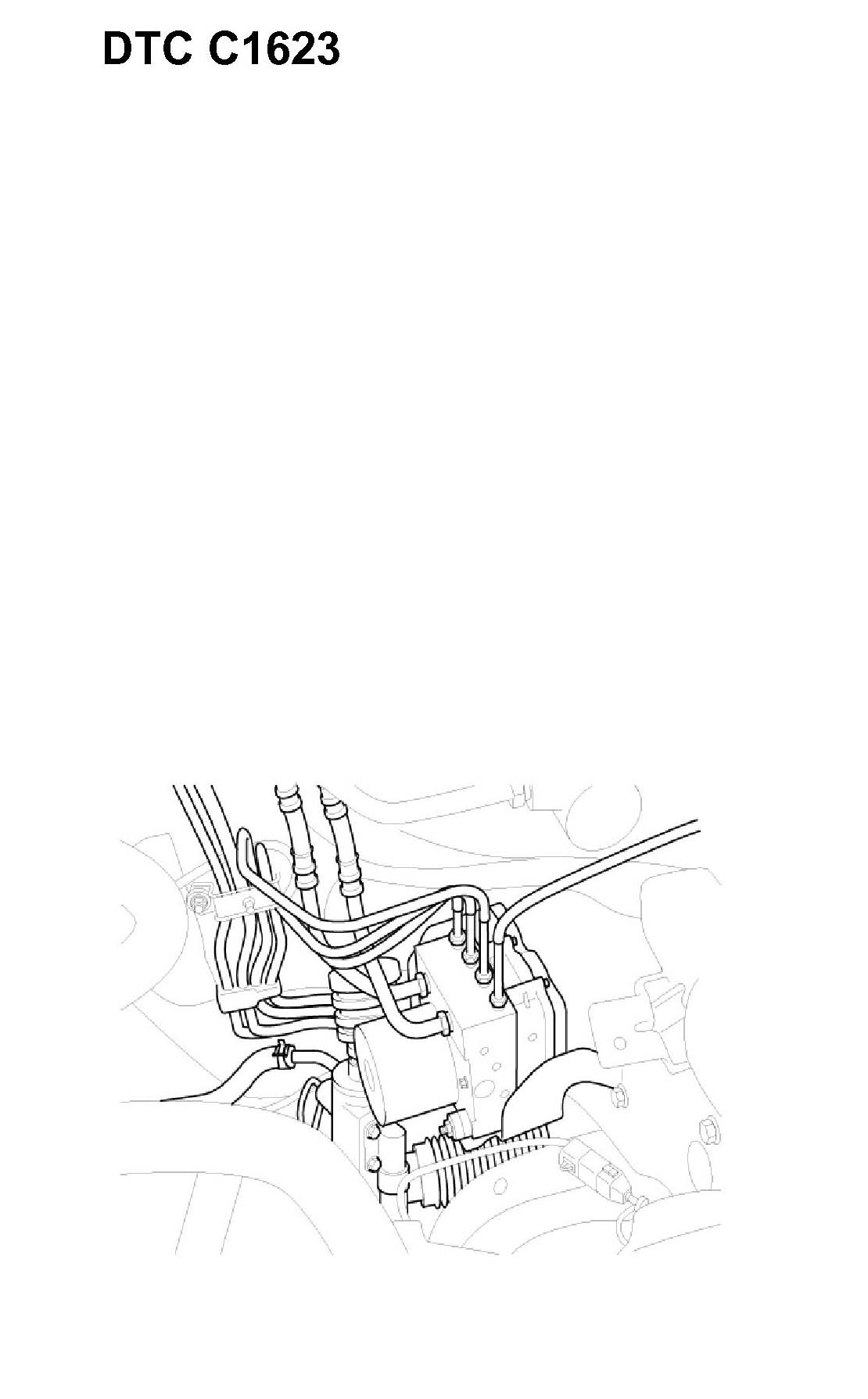
GENERAL DESCRIPTION
The Steering angle sensor (SAS) is composed of main gear, serve gear1 and serve gear2 to determine the turning direction. The SAS is a CAN communication type sensor. If main gear is rotated according to the rotation of steering wheel serve gear 1 and serve gear 2, which is in contact with main gear, will be rotated. The HECU detects the absolute angle by using magnetic MR effect and the difference in gear ratio of each serve gear and then sends to the CAN communication line. The HECU detects the steering wheel's operating speed and operating angle by using absolute angle, and this signal is used in a input signal of anti-roll control.
DTC DESCRIPTION
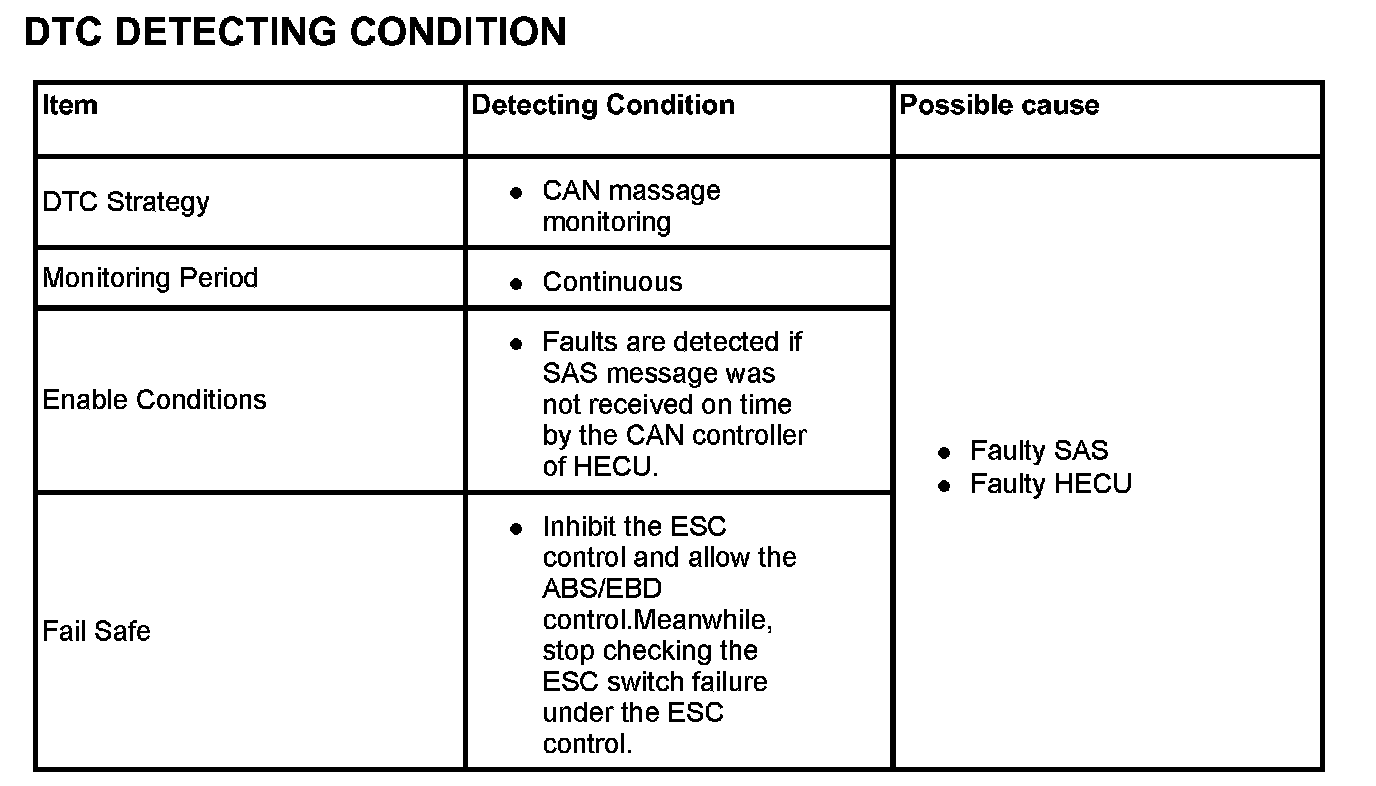
The HECU checks the CAN communication lines for normal ESC control, and sets this code if an WAS message is not received within predefined time.
DTC DETECTING CONDITION:
TERMINAL & CONNECTOR INSPECTION
1. Many malfunctions in the electrical system are caused by poor harness(es) and terminals. Faults can also be caused by interference from other electrical systems, and mechanical or chemical damage.
2. Thoroughly check connectors for looseness, poor connection, bending, corrosion, contamination, deterioration, or damage.
3. Has a problem been found?
YES
Repair as necessary and then go to "Verification of Vehicle Repair" procedure.
NO
Go to "Power Circuit Inspection" procedure.
POWER SUPPLY CIRCUIT INSPECTION
1. Ignition "ON".
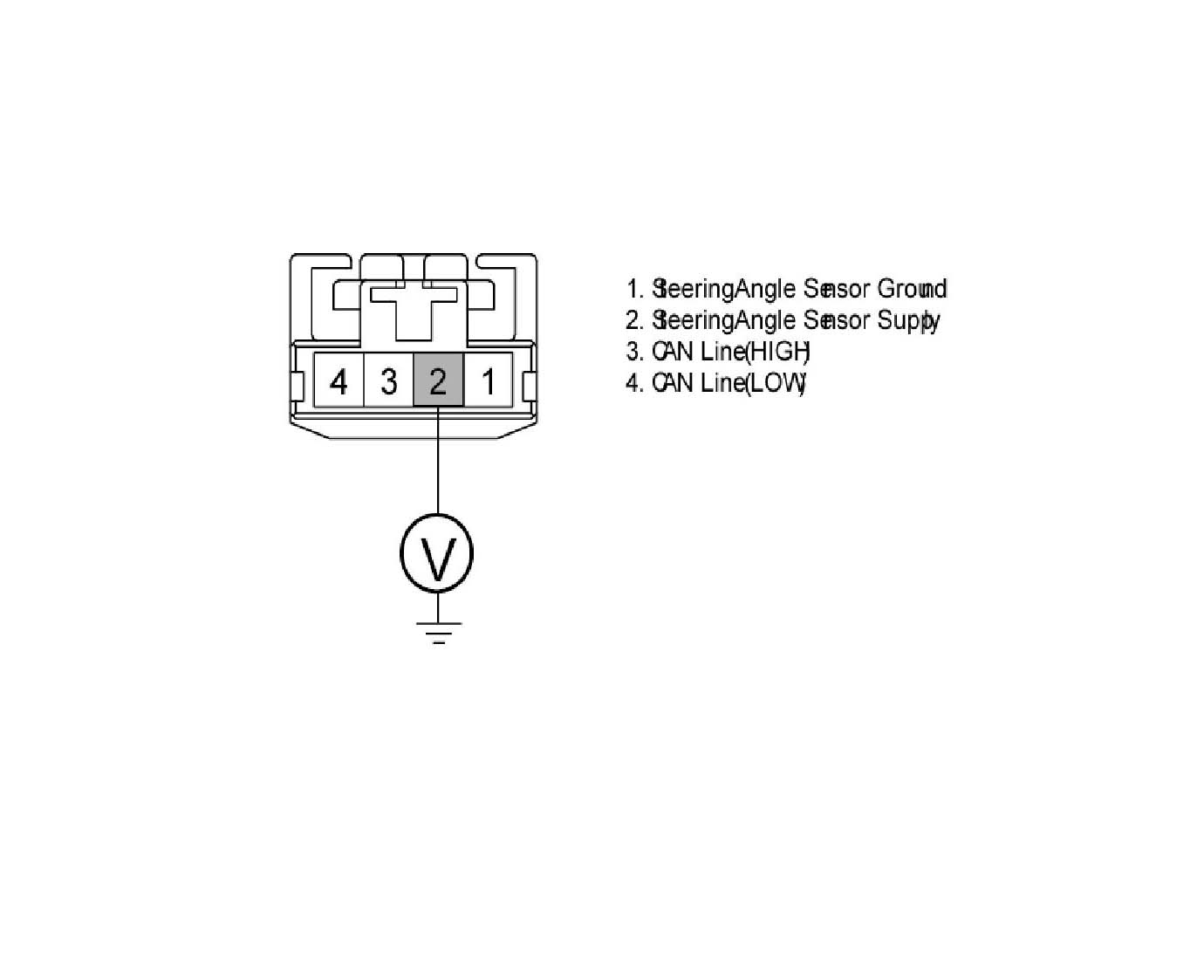
2. Measure voltage between terminal "2" of the steering angle sensor harness connector and chassis ground.
Specification: Approx. B+
3. Is the measured voltage within specifications?
YES
Go to "Ground Circuit Inspection" procedure.
NO
Check for damaged harness and poor connection between the battery terminal (+) and terminal "2" of the steering angle sensor harness connector. Check for open or blown 10 A ABS fuse referring to "Circuit Diagram". Repair as necessary and then go to "Verification of vehicle Repair" procedure.
GROUND CIRCUIT INSPECTION
1. Ignition "OFF".
2. Disconnect SAS connector.
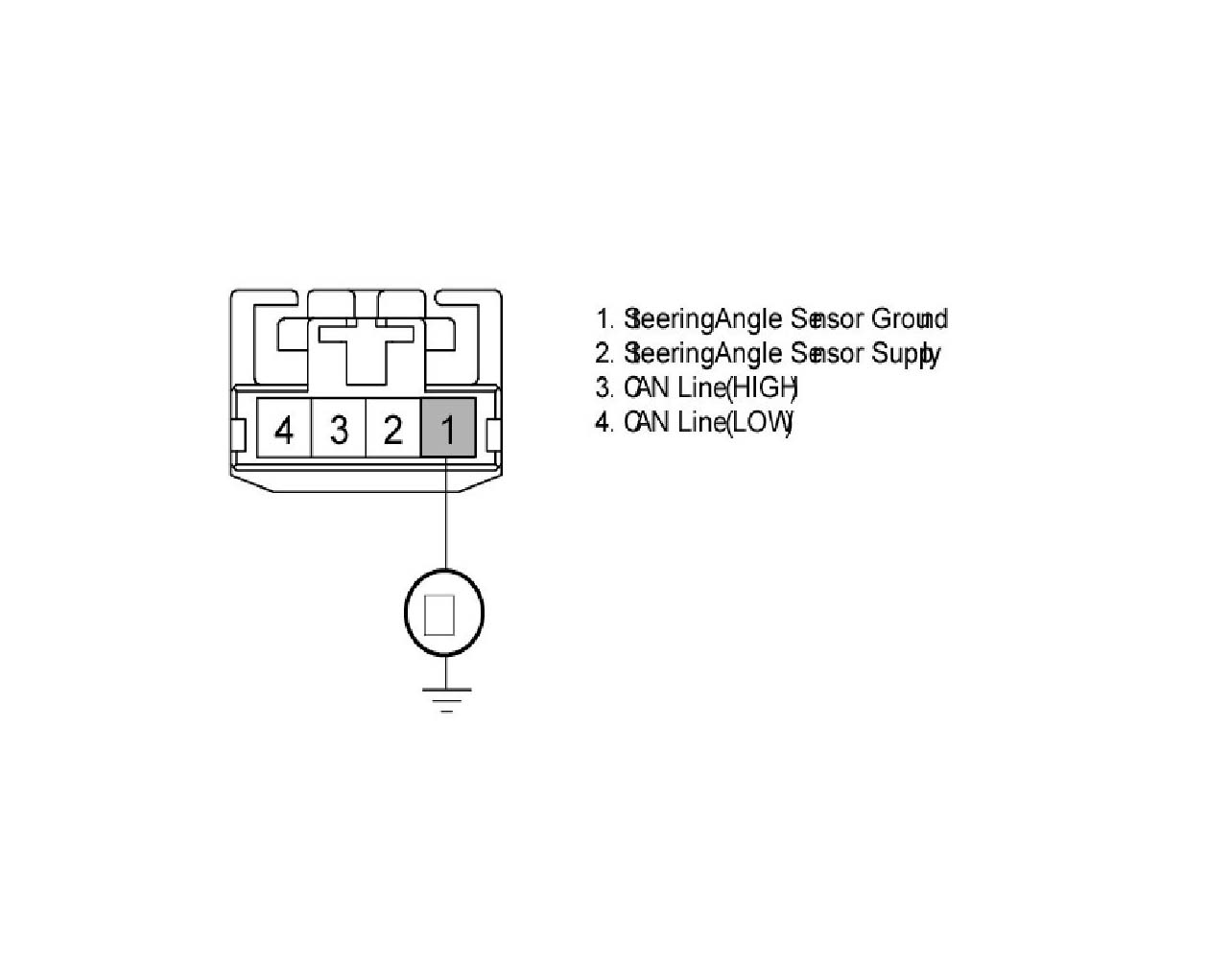
3. Measure resistance between terminal "1" of the steering angle sensor harness connector and chassis ground.
Specification: Approx. below 1
4. Is the measured resistance within specifications?
YES
Go to "CAN Circuit Inspection" procedure.
NO
Check for damaged harness and poor connection between terminal "15" of the HECU harness connector and terminal "1" of the steering angle sensor harness connector. Repair as necessary and then go to "Verification of vehicle Repair" procedure.
CAN CIRCUIT INSPECTION
1. Ignition "OFF".
2. Disconnect SAS connector.
3. Measure resistance between terminal "3, 4" of the steering angle sensor harness connector.
Specification: Approx. 60
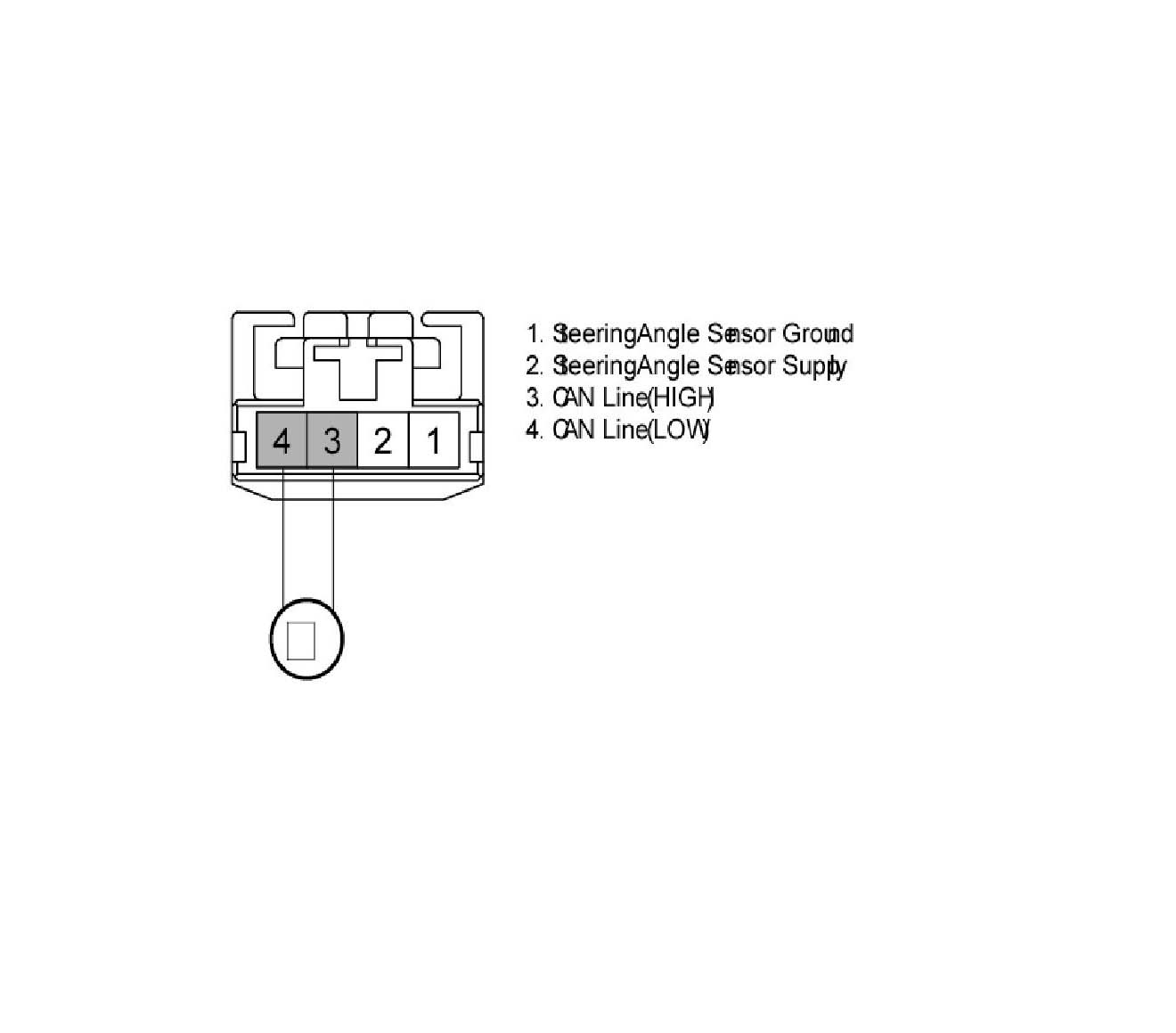
4. Is the measured resistance within specifications?
YES
Check for improper installation of wheel speed sensor. If NG, repair as necessary and then go to "Verification of vehicle Repair" procedure. If OK, Go to "Component Inspection" procedure.
NO
Check for damaged harness and poor connection between terminal "3, 4" of the steering angle sensor harness connector. Repair as necessary and then go to "Verification of vehicle Repair" procedure.
COMPONENT INSPECTION
1. Ignition "OFF".
2. Engine "ON".
3. Does warning lamp remain On?
YES
Substitute with a known-good steering angle sensor and check for proper operation. If problem is corrected, replace sensor and then go to "Verification of Vehicle Repair" procedure. Substitute with a known-good HECU and check for proper operation. If problem is corrected, replace HECU and then go to "Verification of Vehicle Repair" procedure
Fault is intermittent caused by poor connection in power harness (IGN+), faulty Alternator and/or faulty HECU or was repaired and HECU memory was not cleared. Go to the applicable troubleshooting procedure.
VERIFICATION OF VEHICLE REPAIR
After a repair, it is essential to verify that the fault has been corrected.
1. Connect Scantool and select "Diagnostic Trouble Codes (DTCs)" mode
2. Using a Scantool, clear DTC.
3. Operate the vehicle within DTC Detecting Condition in General Information.
4. Are any DTCs present?
YES
Go to the applicable troubleshooting procedure.
NO
System performing to specification at this time.