Idle Up Control Valve: Description and Operation
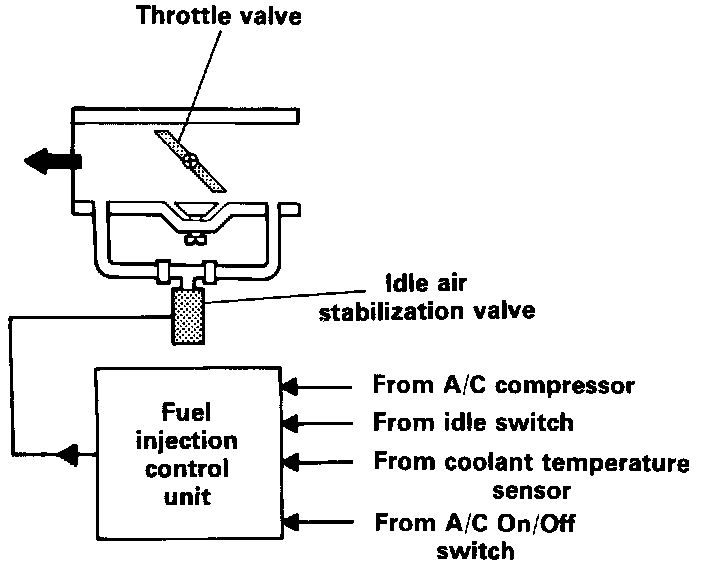
As of 1985 M.Y., both 4 and 5 cylinder engines use an air idle stabilization system to control idle speed.
This system insures that the idle speed remains constant at predetermined levels during all engine operating conditions.
The system maintains the following idle RPM for these conditions.
- Engine cold (less than 50°C) approximately 1,000 RPM
- Engine warm (above 50°C) = approximately 850 RPM
- Engine warm and A/C compressor engaged = approximately 900 - 950 RPM
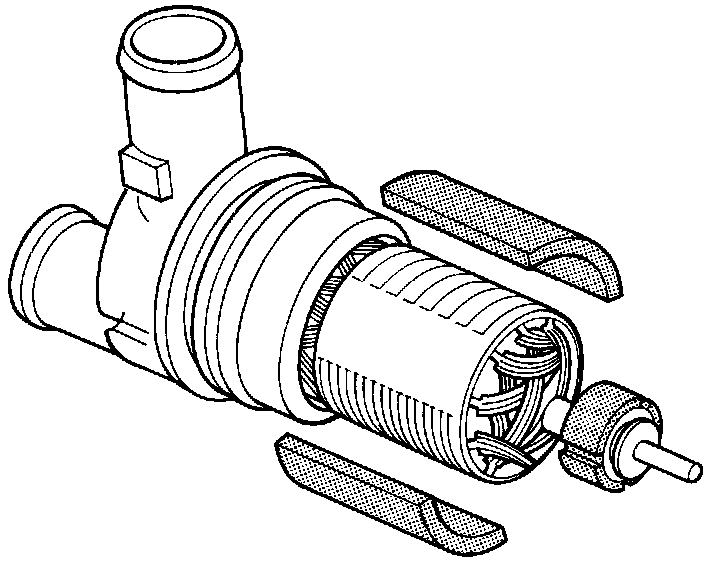
The idle air stabilization valve, which eliminates the auxiliary air regulator, consists of an electric motor with two windings and a turning angle of about 90°. The valve is operated by a cycled voltage signal which is generated by the control unit. By regulating the duty cycle, the valve position can be controlled, resulting in the idle speed being maintained at a predetermined level.
The cycled voltage signal is the same as the signal used to operate a frequency valve in earlier CIS injection systems. A test plug is located in the engine compartment to test and adjust the system.
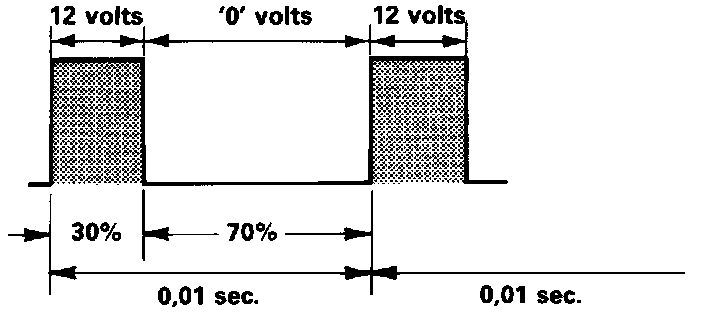
The duty cycle is measured by how long voltage is switched on during a time period of one/one hundredth of a second. For example, a duty cycle reading of 30% would mean that the voltage is switched on for 30% of the time and switched off for 70%.
Pin number three of the idle stabilization valve provides the signal for the test plug used to measure the duty cycle.
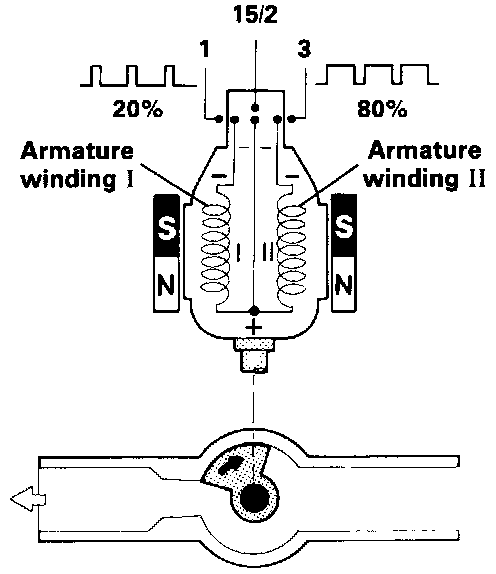
IDLE SPEED TOO LOW
The control unit is notified that the present idle speed is under the specified range of 800 - 900 RPM.
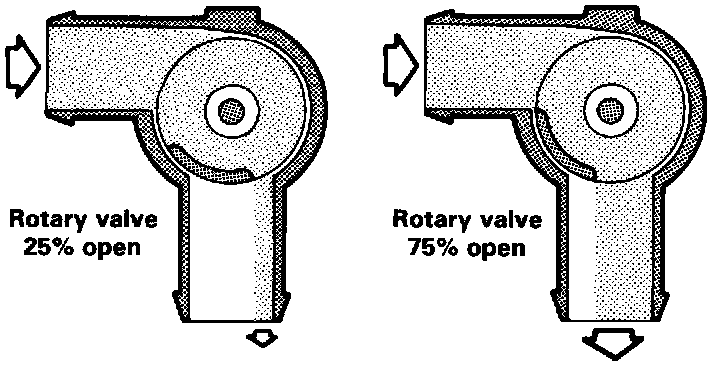
As a result, the duty cycle of the armature windings I and II is immediately changed, so that the duty cycle for winding II rises and that for winding I falls. This means that a greater current flows through winding II and a lesser one through winding I in the same period of time. This results in clockwise torque of the armature, so that the rotary valve opens somewhat. The engine speed rises.
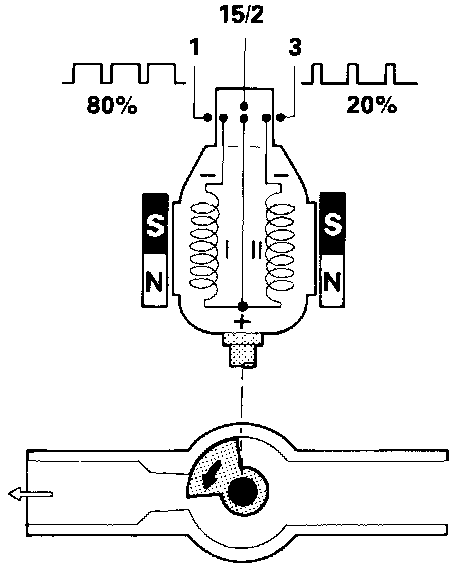
IDLE SPEED TOO HIGH
After a load is switched off, the idle speed rises to more than 900 RPM. As a result, the control unit alters the duty cycle of both armature windings. The duty cycle in winding Irises and the duty cycle in winding II falls by the same amount. This leads to anti-clockwise torque of the armature and the rotary valve closes somewhat. The engine speed drops until it is within the specified range.