Evaporative Emissions System: Description and Operation
EVAP System Schematic:
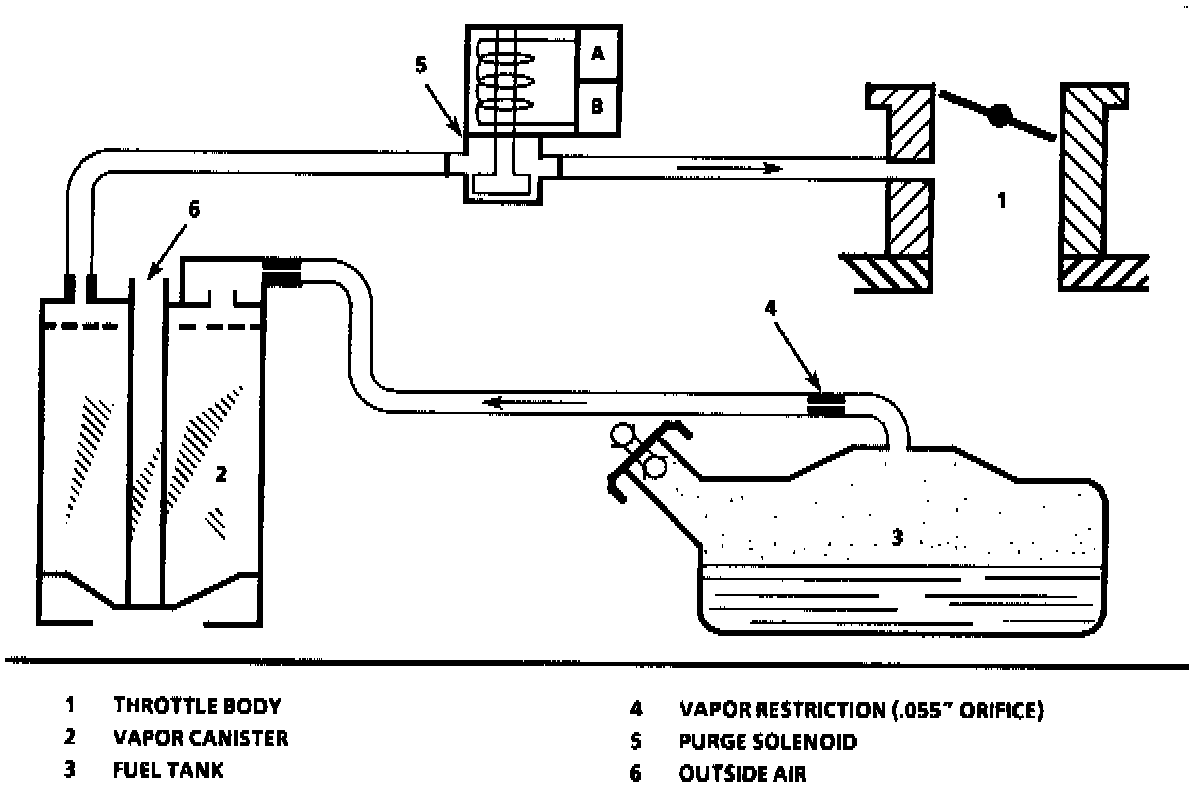
DESCRIPTION
The basic Evaporative Emission (EVAP) control system used on all vehicles is the charcoal canister storage method. This method transfers fuel vapor from the fuel tank to an activated carbon (charcoal) storage device (canister) to hold the vapors when the vehicle is not operating. When the engine is running, the fuel vapor is purged from the carbon element by intake air flow and consumed in the normal combustion process.
OPERATION
The PCM operates a normally closed solenoid valve, which controls vacuum to the purge valve in the charcoal canister.
The PCM turns "ON" the Pulse Width Modulated (PWM) signal to the solenoid valve to control purge when all conditions for allowing purge are met. It is possible for the EVAP system to be purging at idle, in "Closed Loop," at cruising speeds and in "Open Loop."
The PCM pulses "ON" the solenoid to allow purge when:
- The engine is fully warmed up.
- The engine has been running a specified amount of time.
- The Intake Air Temperature (IAT) is above 9.5°C (50°F).
RESULTS OF INCORRECT OPERATION
Poor idle, stalling and poor driveability can be caused by:
- Inoperative purge solenoid.
- Damaged canister.
- Hoses split, cracked and/or not connected properly.