Battery: Description and Operation
Battery Warning Label:
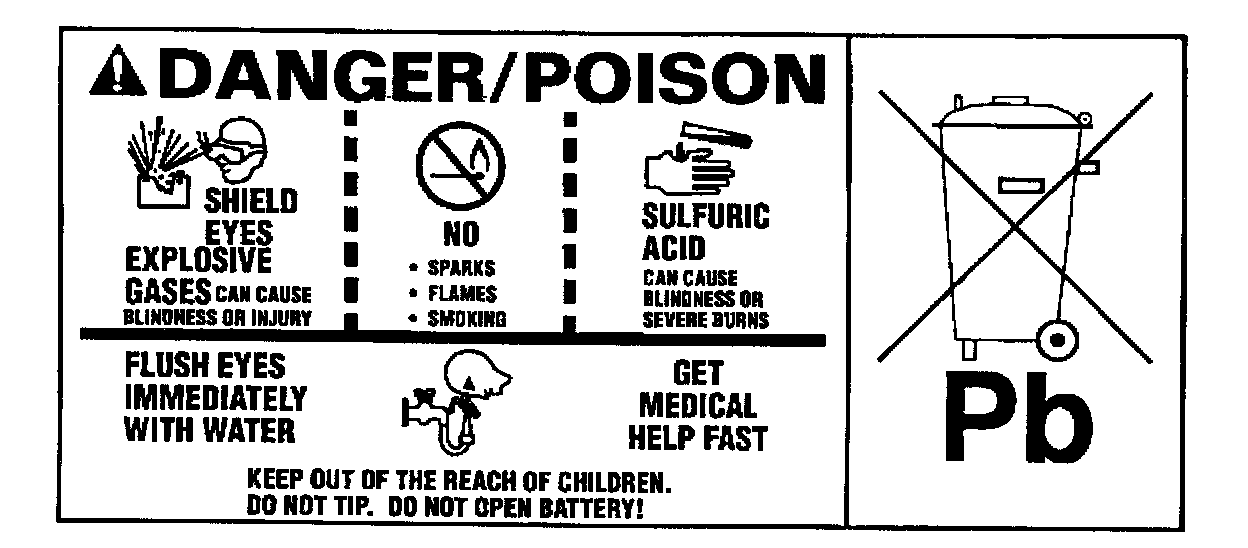
CAUTION: Batteries generate hydrogen gas which is extremely flammable and may explode violently if ignited by a spark or a flame. Battery acid is extremely corrosive and causes severe personal injury if the acid comes into contact with the skin-blindness if the acid comes into contact with the eyes. In order to avoid severe personal injury, use extreme precaution when servicing the battery or battery-related components.
The battery in this vehicle is equipped with a tube system to vent the battery gasses out of the battery compartment. Always reconnect this vent tubing to the battery if it is disconnected for any reason.
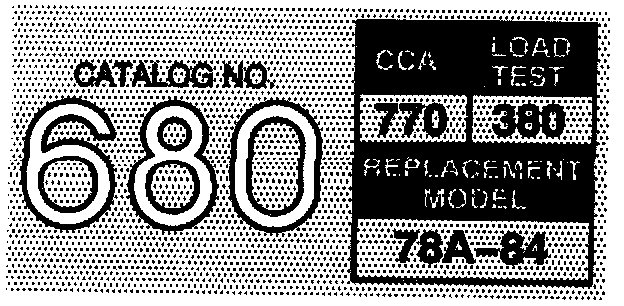
The battery specification label contains information about the following:
^ The test ratings
^ The original equipment catalog number
^ The recommended replacement model number
Battery Specification Label (Example):
Battery Ratings
A battery has two ratings:
^ Reserve capacity
^ Cold cranking amperage
When a battery is replaced use a battery with similar ratings. Refer to the battery specification label on the original battery or refer to Battery Usage Electrical Specifications.
Reserve Capacity
Reserve capacity is the amount of time in minutes it takes a fully charged battery, being discharged at a constant rate of 25 amperes and a constant temperature of 271 °C (800 °F) to reach a terminal voltage of 10.5 V. Refer to Battery Usage for the reserve capacity rating of the original equipment battery.
Cold Cranking Amperage
The cold cranking amperage is an indication of the ability of the battery to crank the engine at cold temperatures. The cold cranking amperage rating is the minimum amperage the battery must maintain for 30 seconds at -18 1|C (0 °F) while maintaining at least 7.2 volts. Refer to Battery Usage Electrical Specifications. for the cold cranking amperage rating for this vehicle.