Central Control Module (CCM)
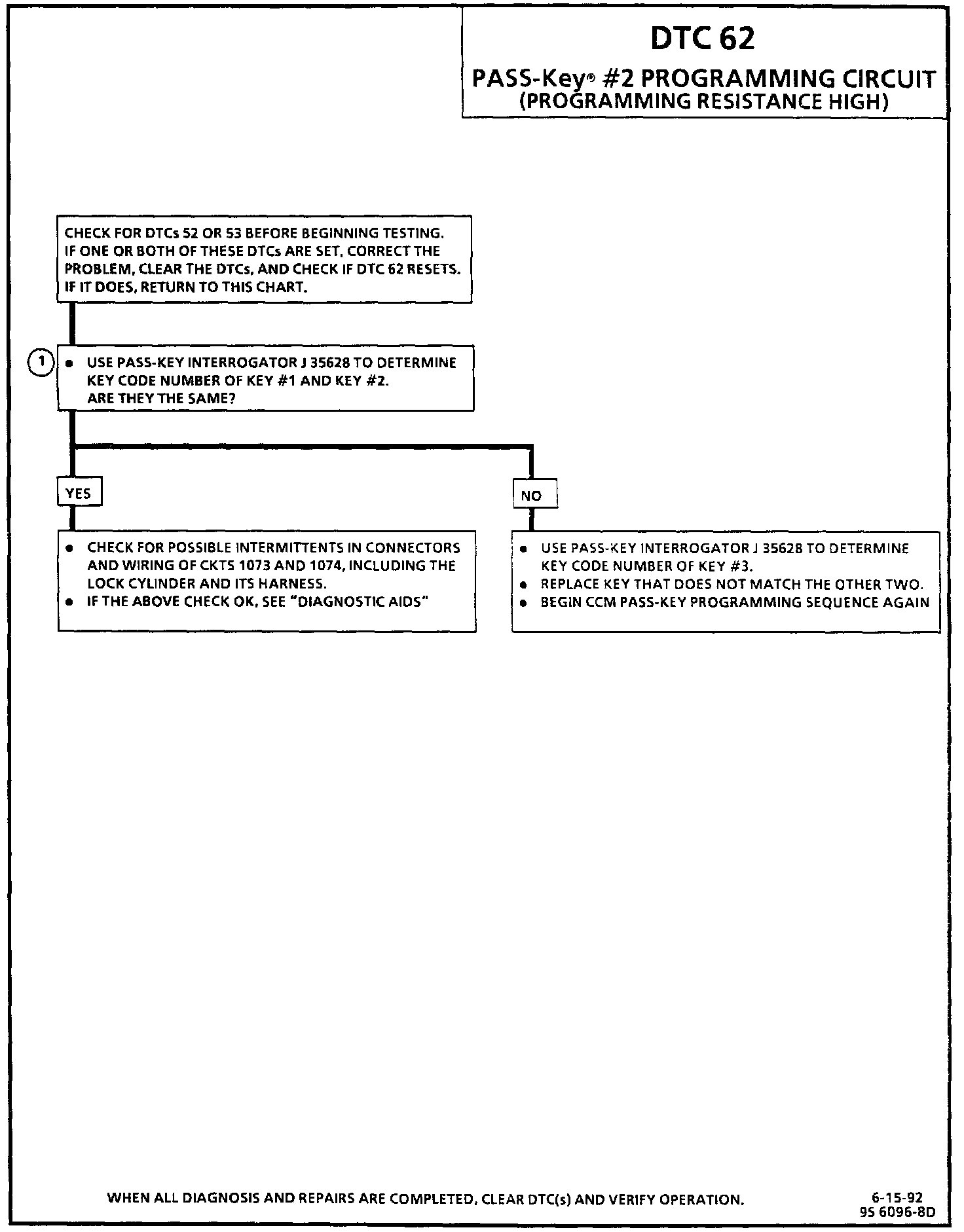
Diagnostic Chart:
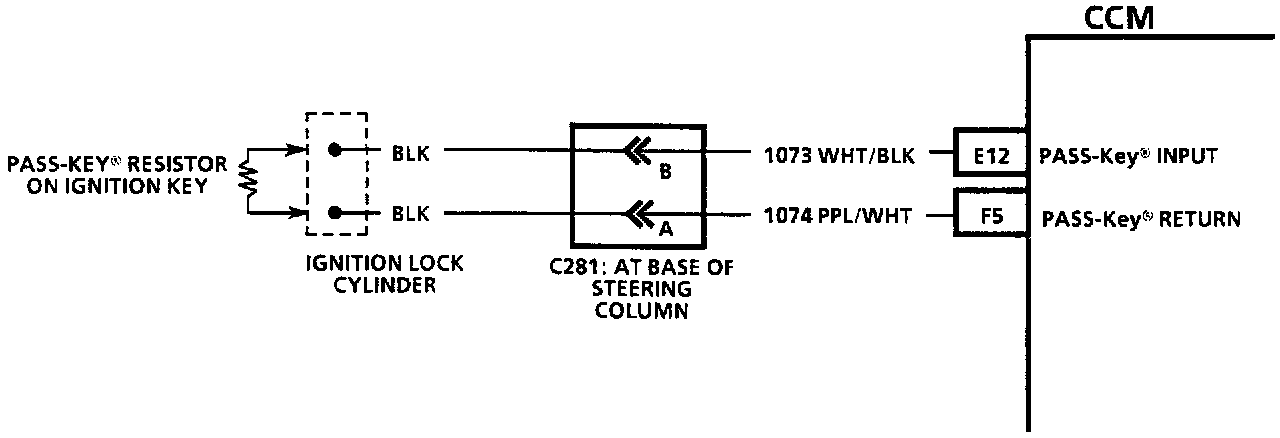
Wiring Diagram:
CIRCUIT DESCRIPTION
When a CCM is replaced, it must be programmed to accept the resistance value of the existing vehicle keys to allow PASS-Key(R) operation. See "Antitheft and Alarm Systems" for programming procedure. Antitheft and Alarm Systems The CCM prompts the technician to insert two of the three keys in succession. The CCM compares the resistances of each of the keys inserted and, if they are both within the same resistance "window," the programming sequence ends and the PASS-Key(R) system is ready for operation.
The PASS-Key(R) detection circuit is completed by the PASS-Key(R) (with embedded resistor pellet) in the ignition lock cylinder. Contacts in the ignition lock cylinder mate with those on the pellet, and the CCM reads the key pellet resistance.
DTC 62 will set if the resistance of Key #2 is higher than the upper limit of the resistance window defined by Key #1.
TEST DESCRIPTION
Number(s) below refers to circled number(s) on the diagnostic chart.
1. This test checks if Key #2 is in the same resistance "window" as Key #1, which the CCM is programmed to from the first step of the programming sequence. If it is, the DTC problem may be due to intermittents; if it is not, then compare the third key in the set to determine which key in the set is malfunctioning.
DIAGNOSTIC AIDS
Check for poor connections at both the CCM and the ignition lock cylinder connector; these could cause an open, short, incorrect PASS-Key(R) resistance, or an intermittent malfunction. Refer to "Intermittents and Poor Connections" in DIAGRAMS.
Make sure the key resistor contacts are clean and free of any grease, oil, etc. These substances could interfere with the key detection circuit.
Make sure the key resistor is clean, clear the CCM DTCs, and try the programming sequence again. If the DTC resets, replace the CCM.