Heated Oxygen Sensor (HO2S) Replacement (HO2S2)
HEATED OXYGEN SENSOR (HO2S) 2
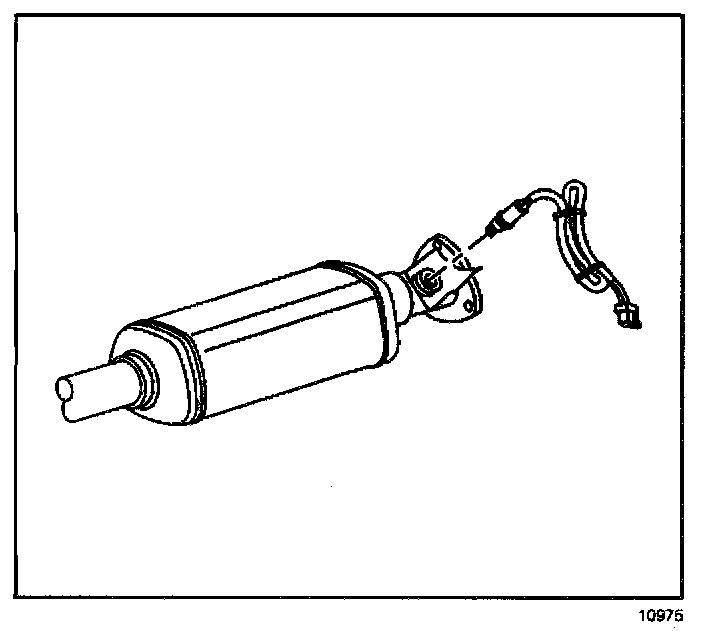
REMOVAL
TOOLS REQUIRED
J 39194-B heated oxygen sensor wrench
Note: The heated oxygen sensor (HO2S) may be difficult to remove when the engine temperature is less than 48�C (120�F). Excessive force may damage the threads in the exhaust manifold or the exhaust pipe.
Note: The Heated Oxygen Sensor (HO2S) and the Oxygen Sensor use a permanently attached pigtail and connector. Do not remove this pigtail from the Heated Oxygen Sensor. Damage or the removal of the pigtail or the connector could affect the proper operation of the sensor.
Take care when handling the HO2S and the O2S. Keep the in-line electrical connector and the louvered end free of grease, dirt, or other contaminants. Also avoid using cleaning solvents of any type. Do not drop the HO2S or the O2S. Do not roughly handle the HO2S or the O2S.O2S.
Removal
1. Turn OFF the ignition.
2. Raise the vehicle.
3. Disconnect the electrical connector.
IMPORTANT: Remove oxygen sensors with the engine temperature above 48�C (120�F). Otherwise the oxygen sensors may be difficult to remove.
A special anti-seize compound is used on the heated oxygen sensor threads. The compound consists of graphite suspended in fluid and glass beads. The graphite will burn away, but the glass beads will remain, making the sensor easier to remove. New or service sensors will already have the compound applied to the threads. If a sensor is removed from an engine and is to be reinstalled, the threads must have anti-seize compound applied before reinstallation.
4. Use the J 39194-B heated oxygen sensor wrench in order to carefully remove the HO2S 2.
INSTALLATION
1. Coat the threads of the HO2S 1 with anti seize compound, or equivalent if necessary.
2. Use the J 39194-B in order to install the HO2S 2.
Tighten
Tighten the HO2S 1 to 42 Nm ±4 Nm (31 lb ft).
3. Connect the electrical connector.
4. Lower the vehicle.