Brake Pads Replacement
Brake Pads ReplacementRemoval Procedure
1. Inspect the fluid level in the brake master cylinder reservoir.
2. If the brake fluid level is midway between the maximum full point and the minimum allowable level, then no brake fluid needs to be removed from reservoir before proceeding. If the brake fluid level is higher than midway between the maximum full point and the minimum allowable level, then remove brake fluid to the midway point before proceeding. Raise and suitably support the vehicle. Refer to Vehicle Lifting.
4. Remove the tire and wheel assembly.
5. Hand tighten two wheel lug nuts to retain the rotor to the hub.
6. Remove the brake caliper. Refer to Brake Caliper Replacement
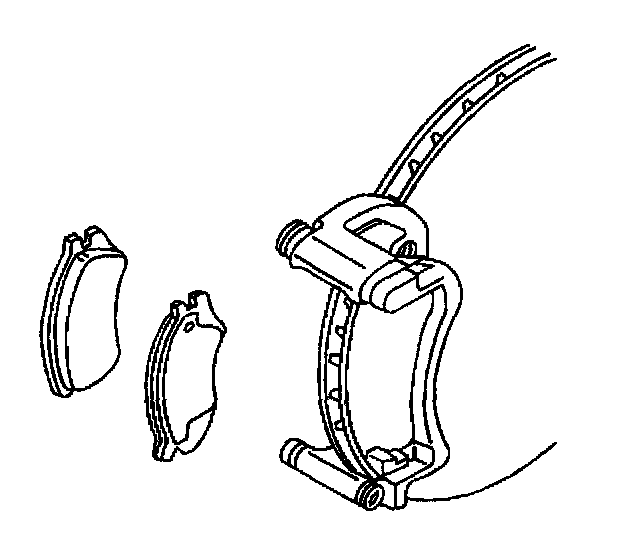
7. Remove the brake pads from the caliper bracket.
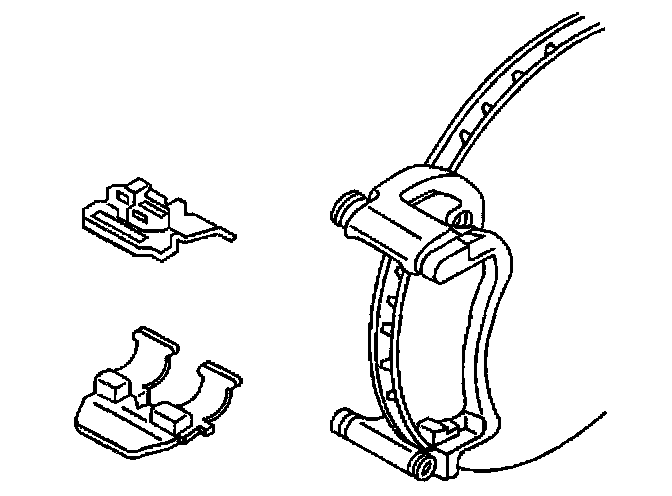
8. Remove the retainer slides from the caliper bracket.
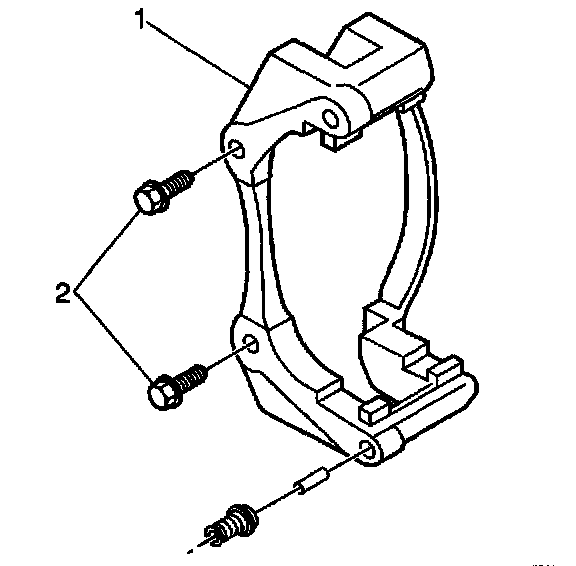
9. Inspect the following parts for cuts, tears, or deterioration. Replace any damaged parts:
- The disc brake mounting and hardware. Refer to Disc Brake Mounting and Hardware Inspection.
- The caliper dust boot. Refer to Brake Caliper Inspection.
10. Inspect the caliper bolts (2) and pins for corrosion or damage. Do not attempt to polish away corrosion. If corrosion is found, use new parts, including bushings, when installing the caliper.
Installation Procedure
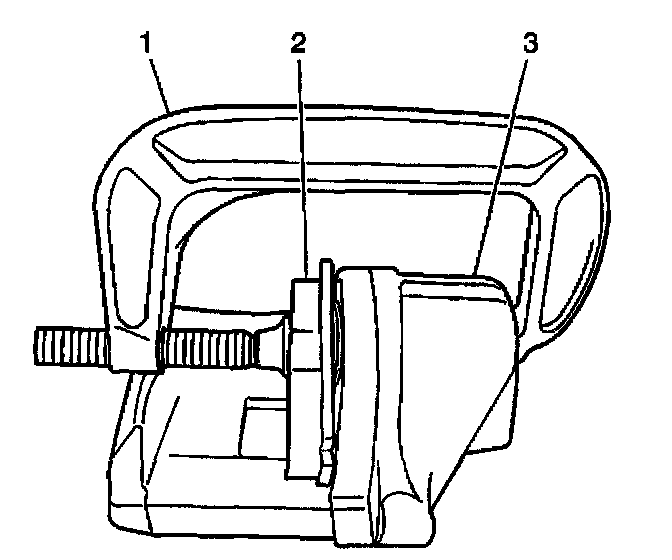
1. Bottom the piston into the caliper bore. Use an old brake pad or wooden block (2) across the face of the piston. Do not damage the piston or the caliper boot.
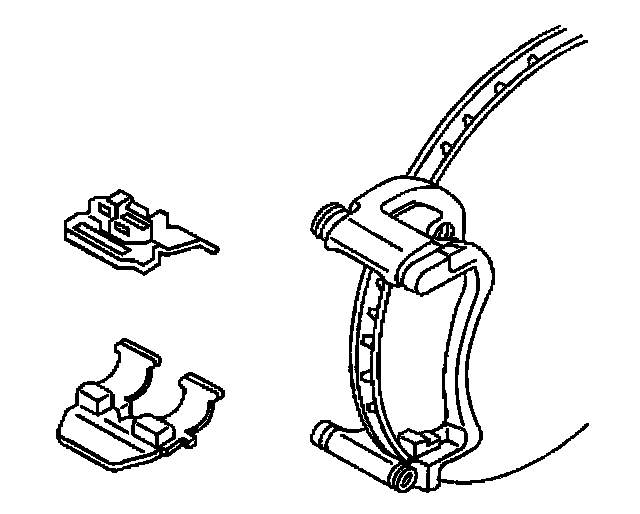
2. Install the two sliders to the caliper bracket.
Important: The wear sensor is on the inner pad. The sensor is positioned at the leading edge (upward) of the pad during forward wheel rotation.
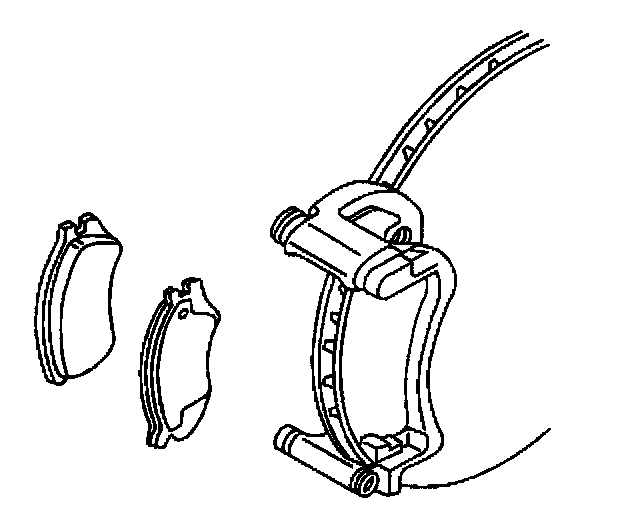
3. Install the pads to the caliper bracket.
4. Remove the two hand tighten wheel lug nuts that retained the rotor to the hub.
5. Install the caliper. Refer to Brake Caliper Replacement.
6. Install the tire and wheel assembly.
7. Lower the vehicle.
8. With the engine OFF, gradually apply the brake pedal to approximately 2/3 of its travel distance.
9. Slowly release the brake pedal.
10. Wait 15 seconds, then repeat steps 8 and 9 until a firm brake pedal is obtained. This will properly seat the brake caliper pistons and brake pads.
11. Fill the master cylinder reservoir to the proper level. Refer to Master Cylinder Reservoir Filling.
12. Burnish the pads and rotors.