Refrigerant Tubes Replacement
Refrigerant Tubes Replacement
Removal Procedure
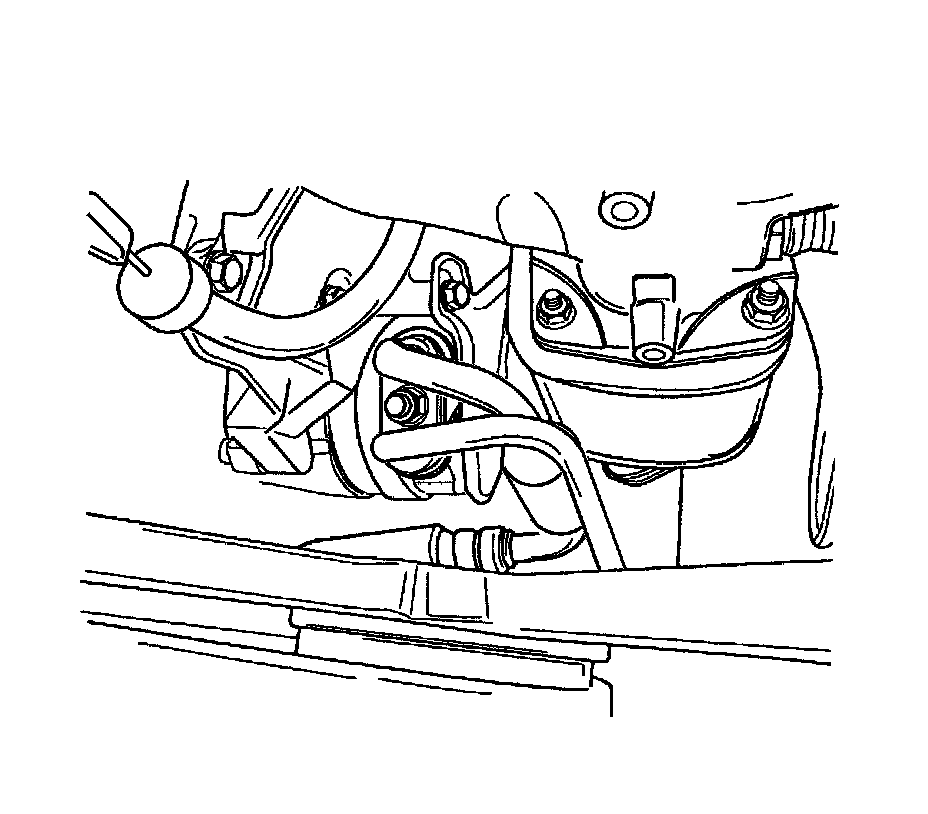
Caution: Refer to Battery Disconnect Caution Battery Disconnect Caution in Cautions and Notices.
1. Disconnect the negative battery cable.
2. Recover the refrigerant. Refer to Refrigerant Recovery and Recharging Refrigerant Recovery and Recharging.
3. Remove the nut at the compressor hose connecting block.
4. Disconnect the electrical connector at the pressure transducer.
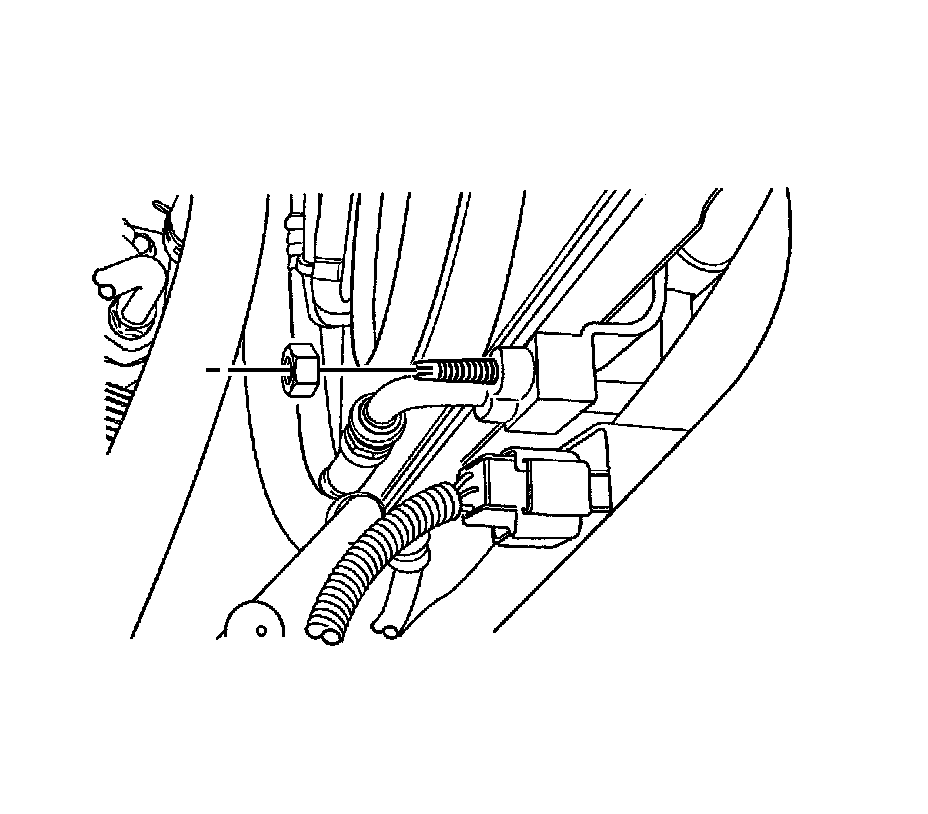
5. Remove the nut at the condenser connecting block.
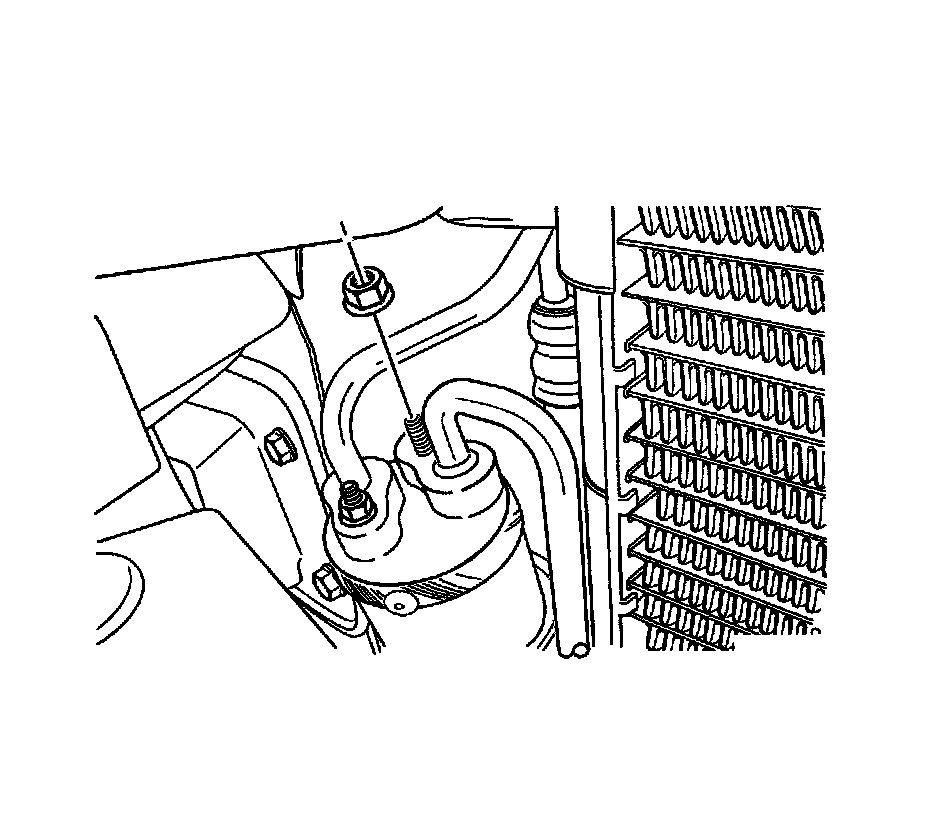
6. Remove the high-pressure pipe-to-receiver-dryer connecting block retaining nut.
7. Remove the surge tank. Refer to Surge Tank Replacement (2.0L) Service and RepairSurge Tank Replacement (2.5L) Service and Repair in Engine Cooling.
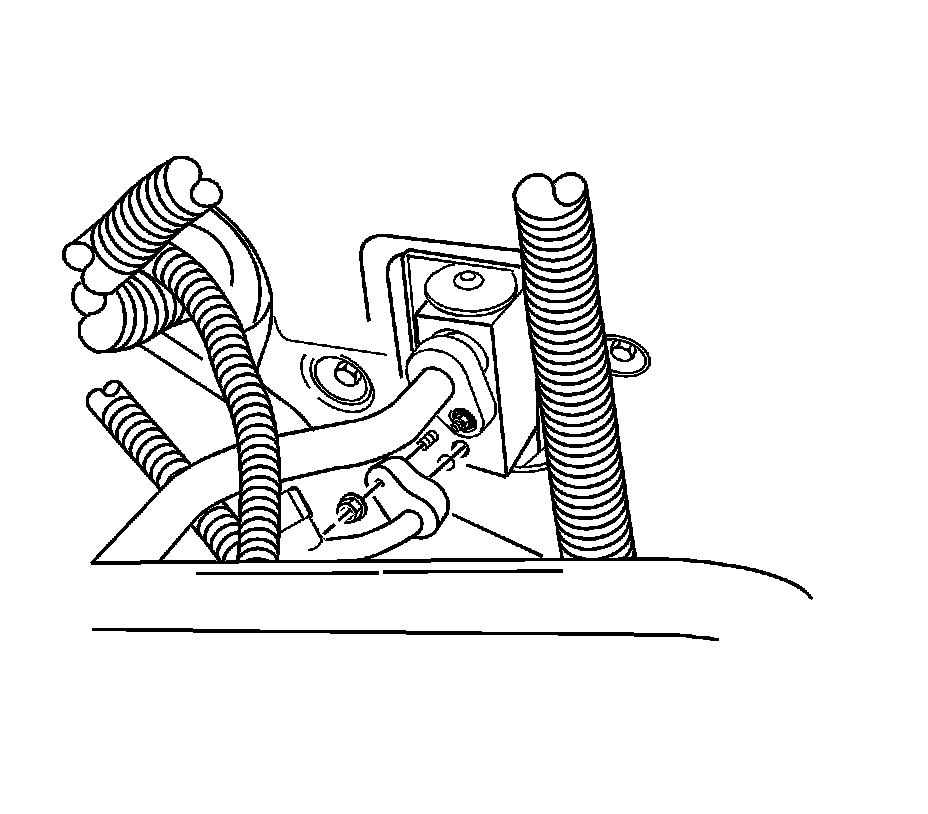
8. Remove the high-pressure pipe-to-evaporator flange connecting block retaining nut.
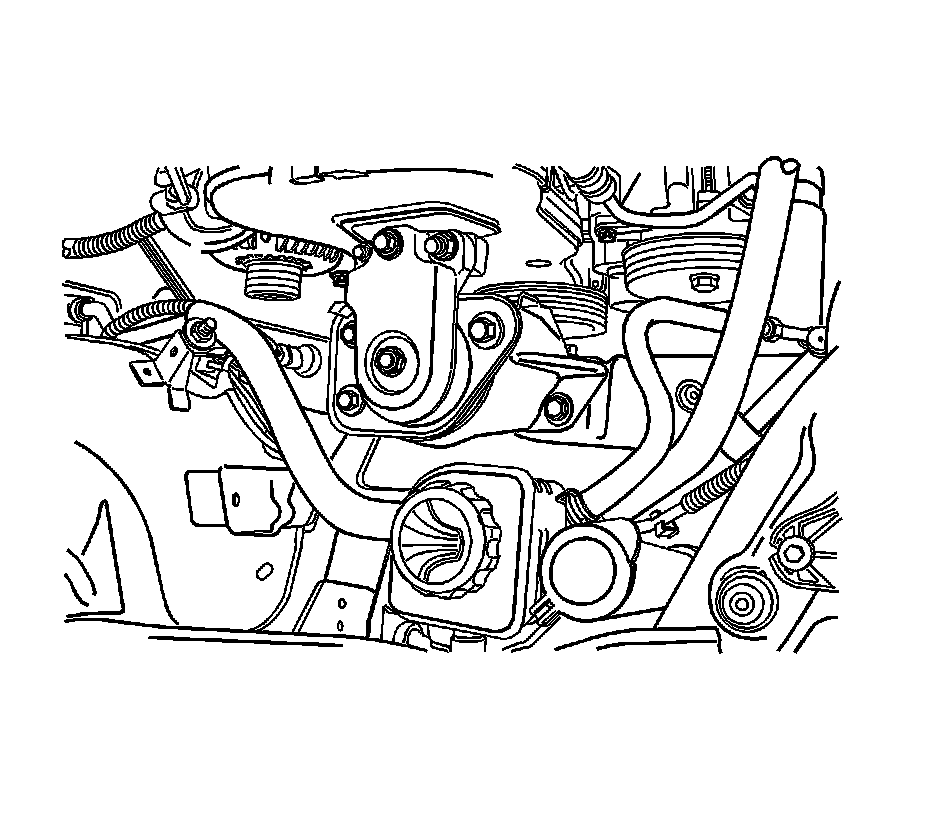
9. Remove the bolt and the nut which secure the clamps that hold the high pressure pipe to the vehicle.
10. Remove the high-pressure pipe from the vehicle.
11. Cap the opening at the receiver-dryer to prevent contamination.
Installation Procedure
1. Position the high-pressure pipe into the vehicle.
2. Install a new O-ring on the pipe at the receiver dryer.
Notice: Refer to Fastener Notice Fastener Notice in Cautions and Notices.
3. Install the high-pressure pipe-to-receiver-dryer connecting block nut.
Tighten the high-pressure pipe-to-receiver-dryer connecting block nut to 14 Nm (10 lb ft).
4. Install the high-pressure pipe to-evaporator flange connecting block retaining nut.
Tighten the high-pressure pipe-to-evaporator flange connecting block retaining nut to 15 Nm (11 lb ft).
5. Install the nut at the condenser connecting block.
Tighten the condenser connecting block nut to 16 Nm (12 lb ft).
6. Install the nut at the compressor hose connecting block.
Tighten the compressor hose connecting block nut to 38 Nm (28 lb ft).
7. Install the bolt and the nut which secure the clamp that hold the high pressure pipe to the vehicle.
8. Connect the electrical connector to the pressure transducer.
9. Install the surge tank. Refer to Surge Tank Replacement (2.0L) Service and RepairSurge Tank Replacement (2.5L) Service and Repair in Engine Cooling.
10. Connect the negative battery cable.
11. Evacuate and recharge the A/C system. Refer to Refrigerant Recovery and Recharging Refrigerant Recovery and Recharging.