HVAC Preliminary Checks
HVAC Preliminary Checks
R-134A Pressure-Temperature Relationship
If you suspect a problem in the refrigerant system, check for the following conditions:
1. Check the outer surfaces of the radiator and the condenser cores to be sure that the airflow is not blocked by dirt, leaves, or other foreign material. Check between the condenser and the radiator, as well as all outer surfaces.
2. Check for restrictions or kinks in the condenser core, the hoses, and the tubes.
3. Check the operation of the blower fan.
4. Check all the air ducts for leaks or restrictions. A low airflow rate may indicate a restricted evaporator core.
5. Check for slippage of the compressor clutch.
6. Check the drive belt tension.
Insufficient Cooling QUICK CHECK Procedure
Perform the following hand-feel procedure to get a quick idea of whether the air conditioning (A/C) system has the proper charge of Refrigerant-134a.
1. Warm up the engine. Run the engine at idle.
2. Open the hood and all the doors.
3. Turn the A/C switch ON.
4. Set the temperature control to the full cold position.
5. Set the blower speed switch on 4.
6. Hand-feel the temperature of the evaporator outlet pipe. The pipe should be cold.
7. Check for any other problems.
8. Leak check the system. Refer to Leak Testing Leak Testing. If you find a leak, discharge the system and repair the leak as required. After completing the repair, evacuate and charge the system.
9. If there is no leak, refer to Too Hot in Vehicle Too Hot in Vehicle in HVAC System - Manual.
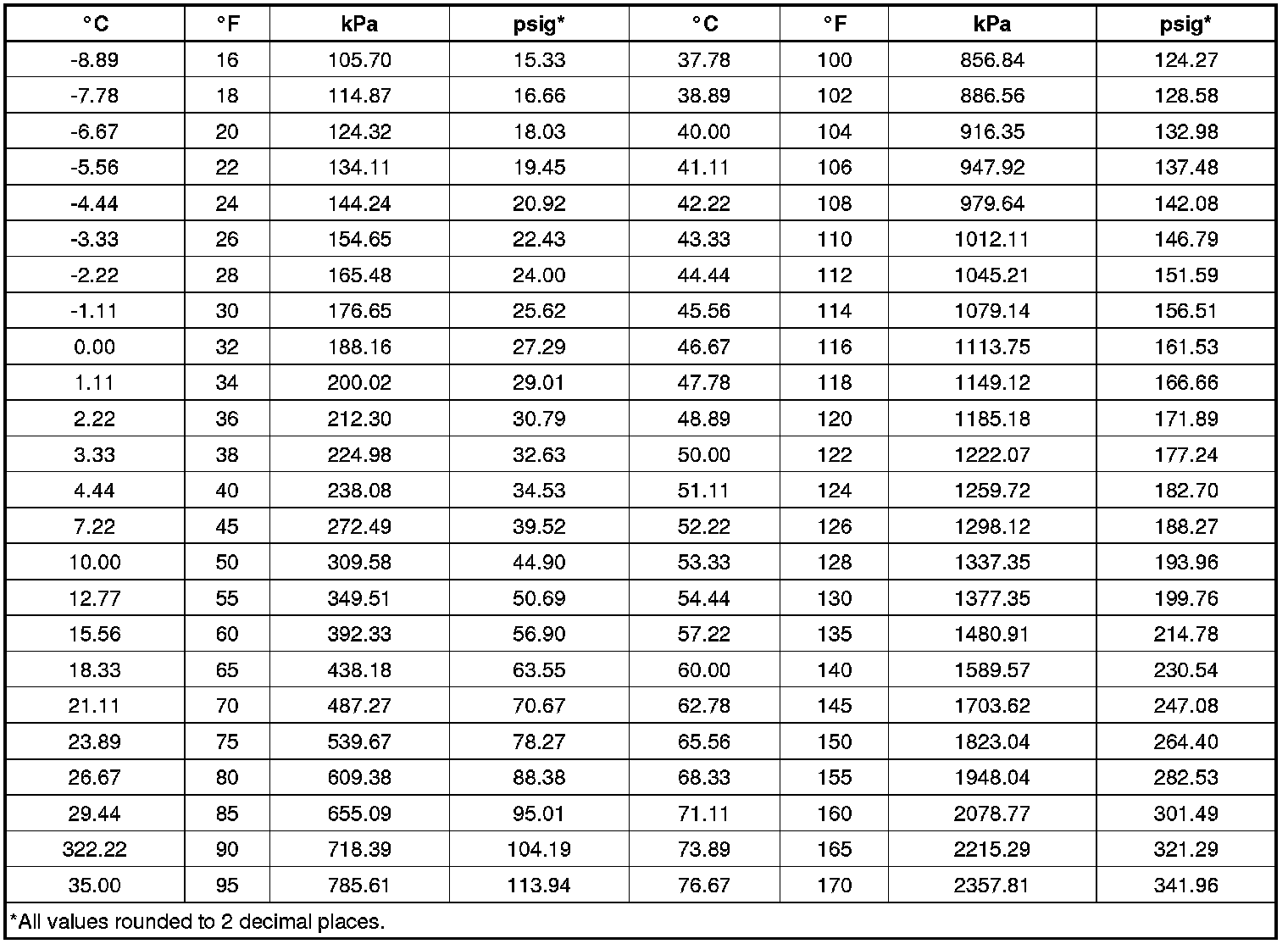
Evaporator Range: From -6.67 to -7.22°C (20 to 45°F), the temperatures represent the gas temperatures inside the coil and not on the coil surfaces. Add 1.67-5.56°C (3-10°F) the temperature for coil and air-off temperatures.
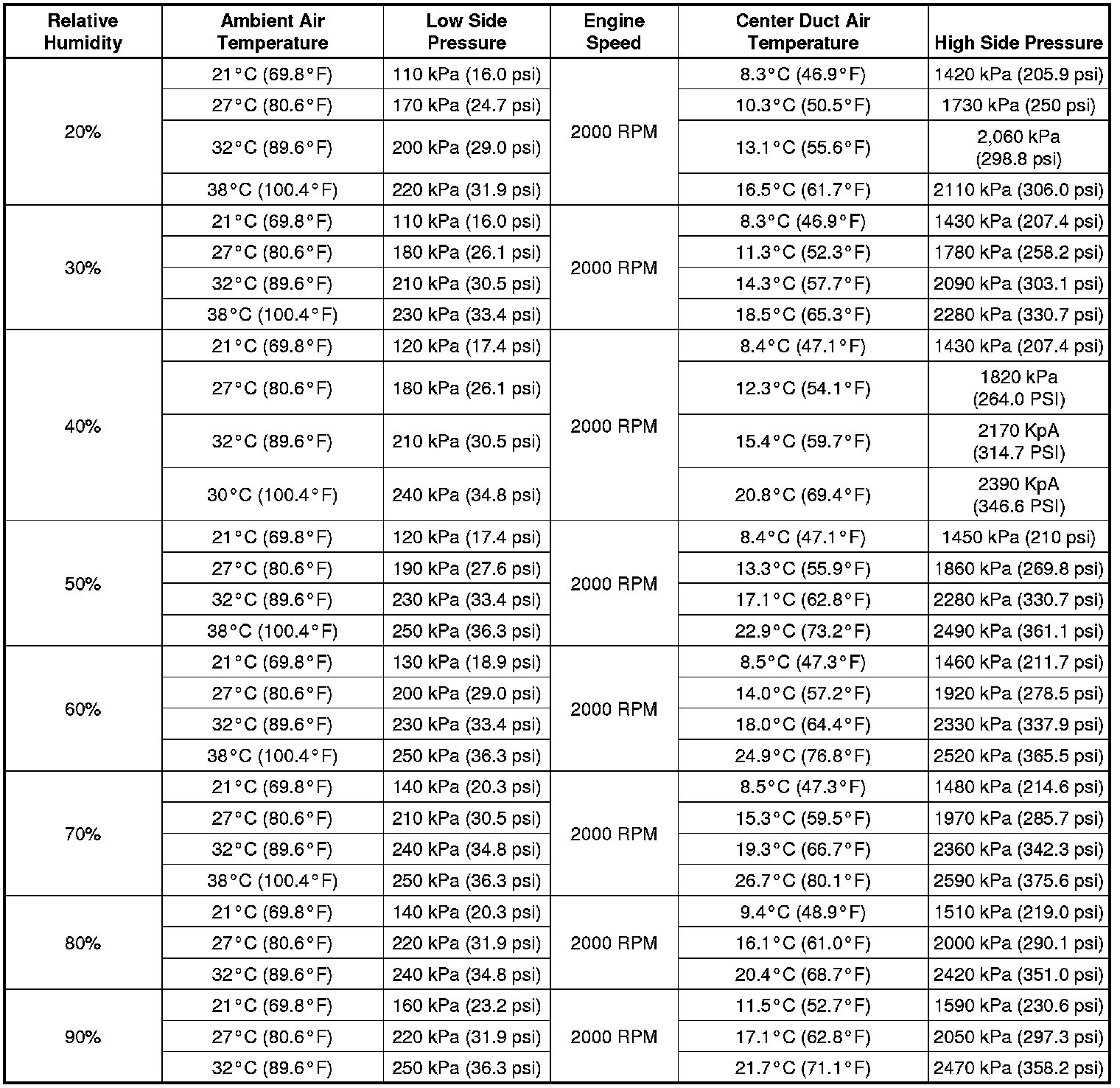
Condenser Range: From 110-160°F, to the temperatures are not ambient. Add 19.4-22.2°C (35-40°F) for proper heat transfer, and then refer to the A/C Performance Chart.
A/C Performance Chart