Clutch: Description and Operation
CLUTCHDESCRIPTION
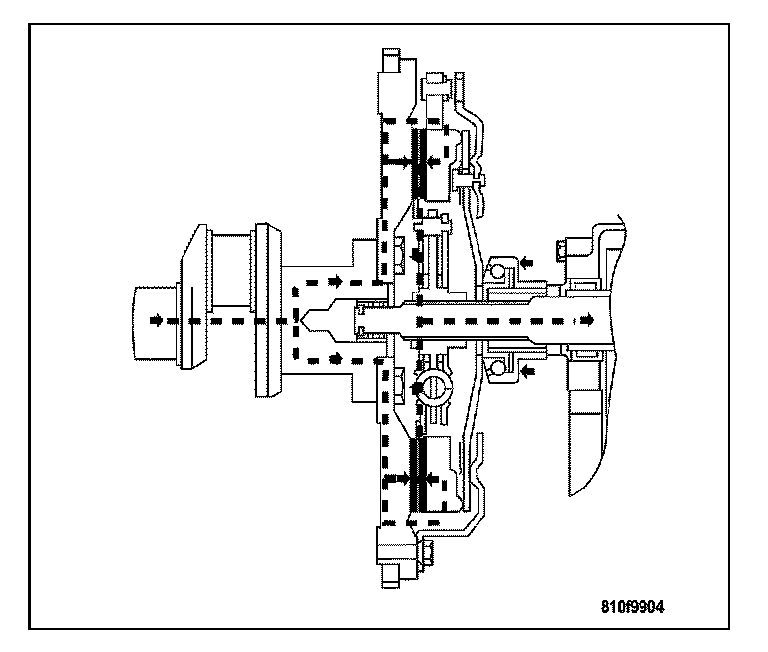
The clutch mechanism consists of a flywheel, a single, dry-type disc, and a diaphragm style clutch cover. A hydraulic linkage is used to operate the clutch release bearing. The flywheel is bolted to the rear flange of the crankshaft. The clutch cover is bolted to the flywheel with the clutch disc located between these two components. The clutch system provides a mechanical link between the engine and the transmission. The system is designed to ensure that the full torque output of the engine is transferred to the transmission while isolating the transmission from the engine firing pulses to minimize concerns such as gear rattle.
OPERATION
The clutch operates with leverage, clamping force, and friction. The disc serves as the friction element and the diaphragm-style clutch cover provides the clamping force. The clutch pedal, hydraulic linkage, and the release bearing provide the leverage.
A shared reservoir for the brake system and clutch system is mounted to the dash panel. The clutch master cylinder push rod is connected to the clutch pedal. When the clutch pedal is depressed, the slave cylinder is operated by the clutch master cylinder mounted on the pedal assembly. The release bearing then depresses the clutch cover spring fingers, thereby releasing pressure on the clutch disc and allowing the engine crankshaft to spin independently of the transmission input shaft.