Rear
Rear Bushing Replacement1. Remove the disc brake caliper from the rear knuckle. Refer to Replacement for the procedure. Rear
2. Discard the original upper and lower slide pin bolts used to mount the caliper to the knuckle.
3. Remove the brake shoe assemblies from the caliper assembly. See Brake Pad for the procedure. Service and Repair
Slide Pin Bushing And Boots:
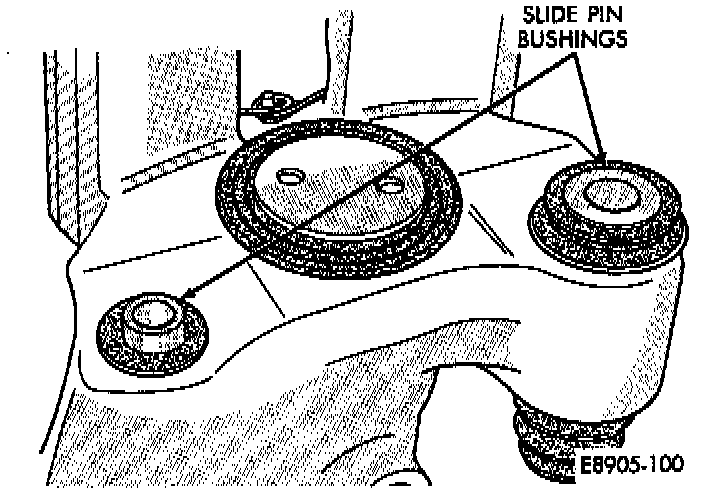
4. Remove the upper and lower slide pin bushings and boots from the caliper. The bushings are a slip fit and should come out with finger pressure. However, if the bushings are tight, tap them loose with a mallet.
5. Clean the bushing bores with brake cleaner and a wire brush.
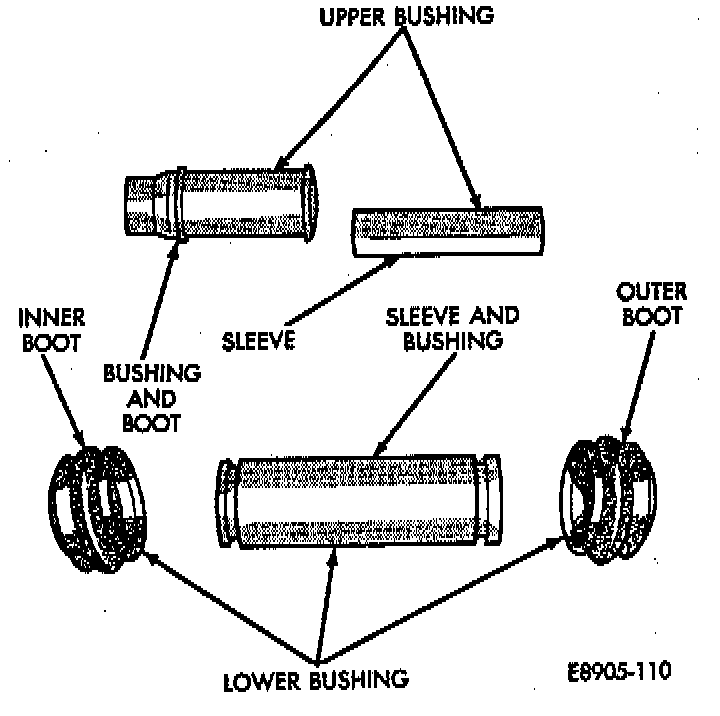
6. Lubricate the new slide pin bushings and boots with silicone lubricant.
7. Assemble and install the slide pin bushings and boots into the bushing bores of the caliper.
8. If new brake shoes are being installed, seat (bottom) the caliper piston. Refer to Brake Pad for the correct procedure for seating the caliper. Service and Repair
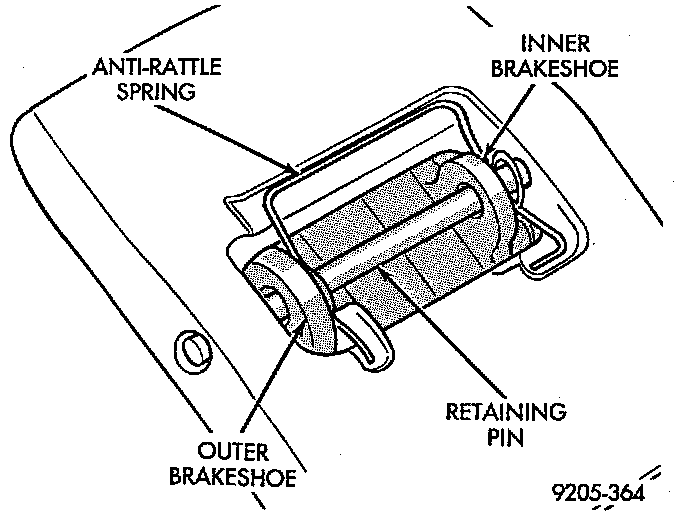
9. Install the brake shoes in the rear brake caliper. See Brake Pad for the procedure. Service and Repair
10. Install the disc brake caliper on the rear knuckle. Refer to Brake Caliper for the procedure. Service and Repair
11. Bleed both rear disc brake calipers. See Brakes for the bleeding procedure. Service and Repair
12. Install the wheel and tire assemblies. Note the location tire and wheel were removed from on vehicle. They must be replaced in the same location due to the tires being uni-directional. Tighten the wheel mounting stud nuts in proper sequence until all nuts are torqued to half specification. Then repeat the tightening sequence to the full specified torque of 108 - 136 Nm (80 - 100 ft. lbs.).
13. Lower the vehicle to the ground. Before moving vehicle, pump the brake pedal several times to insure the vehicle has a firm brake pedal to adequately stop vehicle.
14. Apply the brakes several times to seat the brake shoes and equalize parking brake adjustment.
15. Road test the vehicle making several stops to wear off any foreign material on the brakes and to seat the brakes. See Brake Pad for the correct Burnishing procedure if NEW brake shoe assemblies were installed. Service and Repair