Air Divert/Control Valves
During engine deceleration, high intake manifold vacuum enriches the air/fuel mixture. If air is allowed to flow into the exhaust manifold during deceleration, it will combine with excess unburned fuel in the exhaust, causing the engine to backfire, which can damage the converter and muffler.Air Control Valves w/o Pressure Relief:
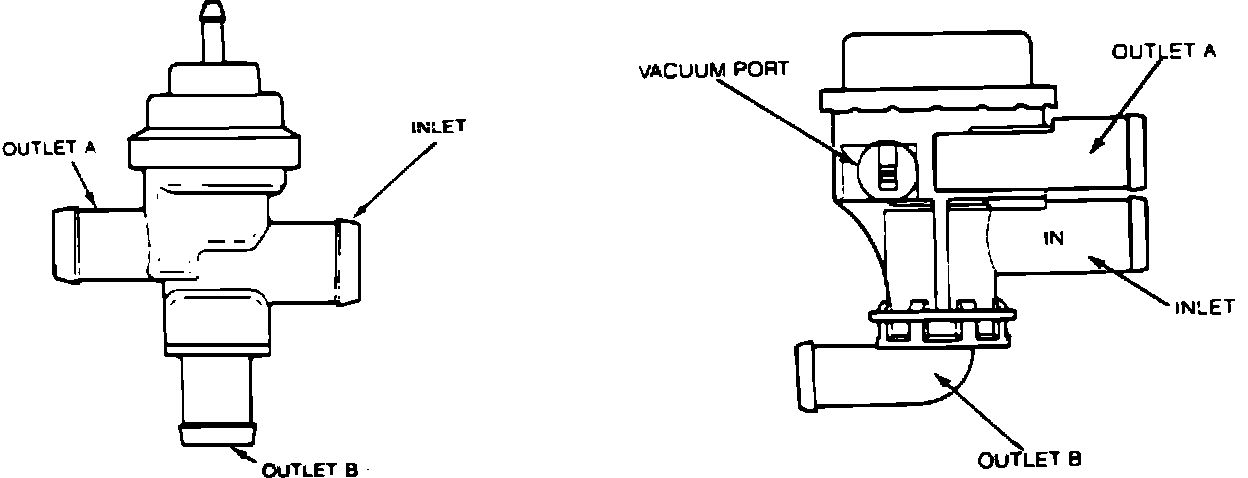
The operation of the diverter valve is to redirect air flow from the air pump, by applying manifold vacuum to a diaphragm actuated chamber. Depending on the valves placement and usage within a system, the diverter valve may also be referred to as a bypass valve or a switching valve.
When vacuum is applied to the vacuum chamber of the valve, pump air is allowed to pass through the valve on its way to the exhaust manifold or to the catalytic converter. Some engine strategies may utilize the valve to direct pump air to the atmosphere, bypassing the air management system and valves completely.
During deceleration manifold vacuum operates the valve diaphragm to redirect the air to the atmosphere.
Some valves vent the air to the engine air cleaner for muffling. Other valves may vent air through a muffler and filter built into the control valve.
Air Control Valve With Switch-Relief:
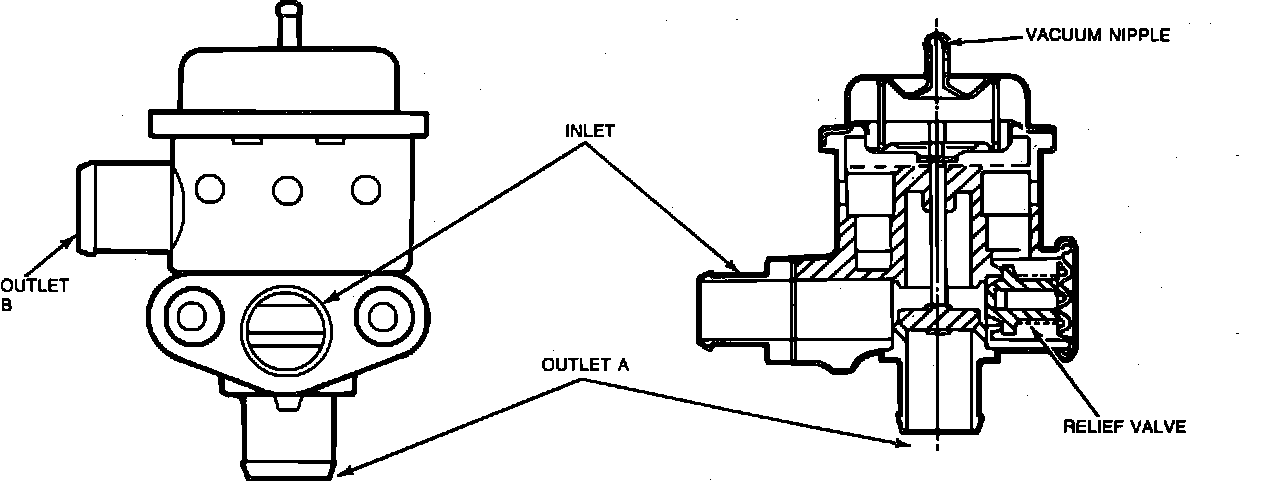
Air Control Valves w/Switch-Relief (Late Production):
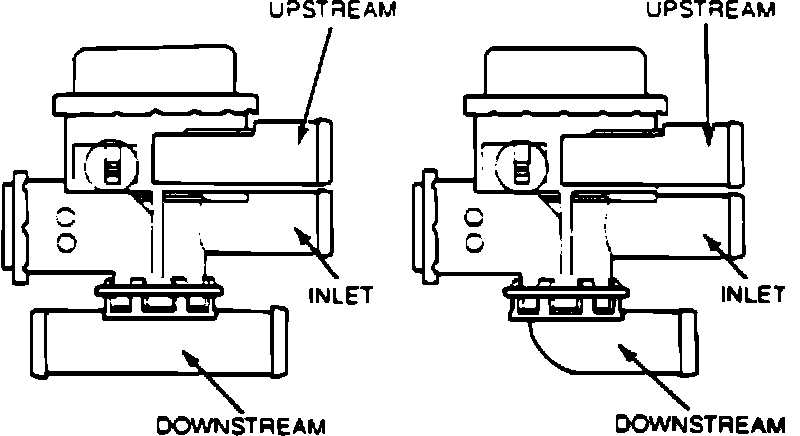
Some control valves are equipped with a pressure/switch relief port. These valves are primarily used on vehicles that use an air injection pump not equipped with a built-in pressure relief valve.