Fuel Pump Operation Check
FUEL PUMP OPERATION CHECK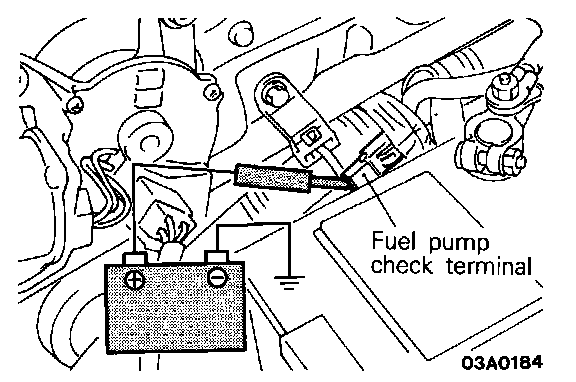
(1) Set the ignition switch at OFF.
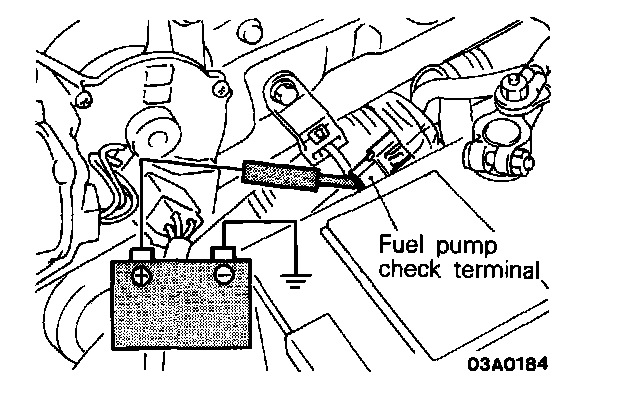
(2) Check that when the battery Voltage is directly applied to the fuel pump check terminal, the operating sound of the pump can be heard.
NOTE Since the fuel pump is installed in the fuel tank, its operating sound cannot be readily heard. Remove the fuel tank cap and listen to the operating sound through the filler port.
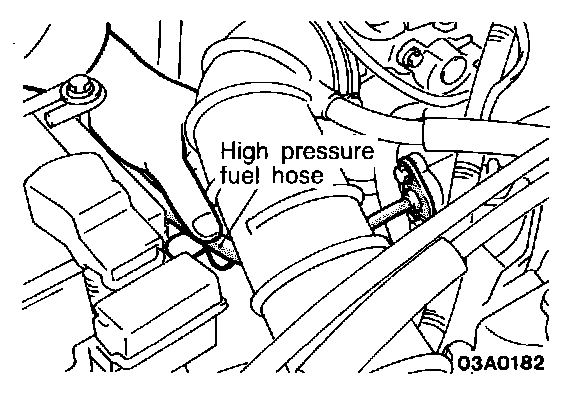
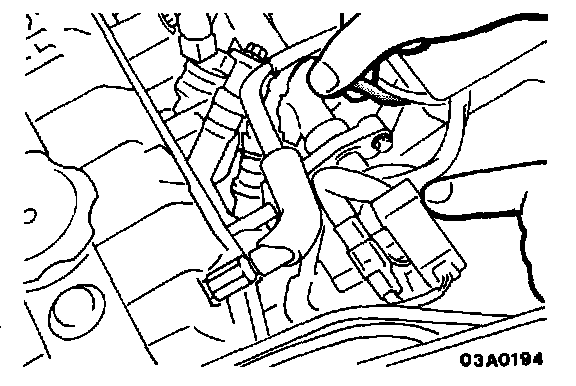
(3) Hold the high pressure fuel hose between your fingers and check that the fuel pressure can be felt.
FUEL PRESSURE TEST
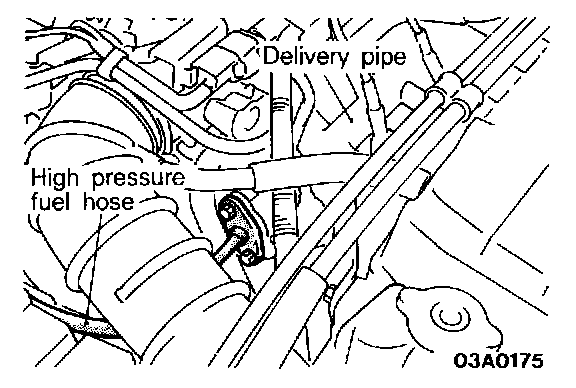
(1) Reduce the fuel pressure in the fuel line.
(2) Disconnect the high pressure fuel hose from the delivery pipe.
CAUTION Cover the hose connection with shop towel to prevent splash of fuel that could be caused by residual pressure in the fuel pipe line.
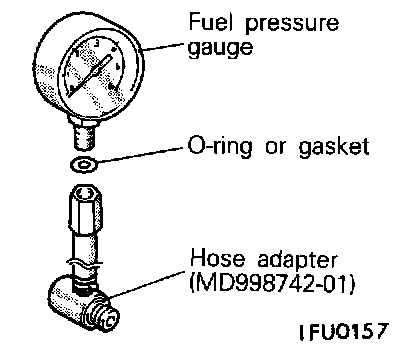
(3) Connect a fuel pressure gauge to the special tool (hose adapter).
Use a suitable 0-ring or gasket between the fuel pressure gauge and the special tool so as to seal in order to. prevent fuel leakage at this time.
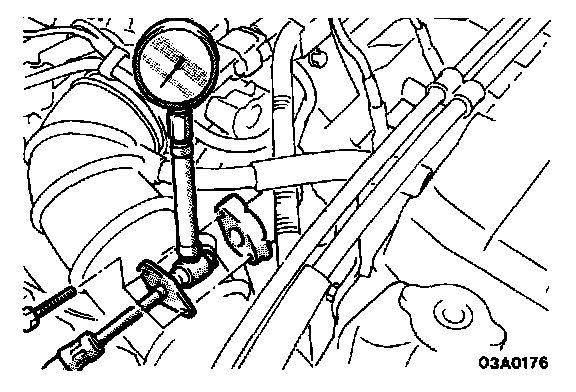
(4) Install the special tool, which was set in place in step (3), between the delivery pipe and the high pressure fuel hose.
(5) Connect the 0 terminal of the battery.
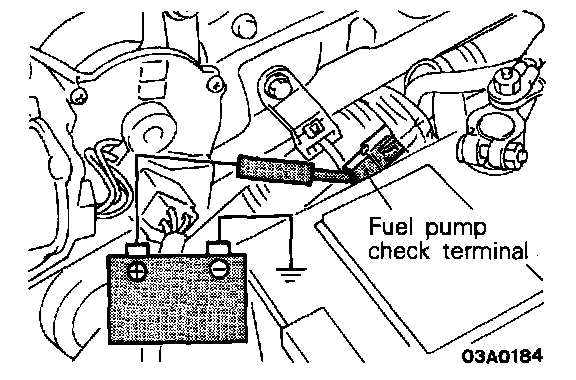
(6) Apply battery Voltage to the fuel pump check terminal and activate the fuel pump; then, with tuel pressure thus applied, check to be sure that there is no tuel leakage from the pressure gauge or the special tool connection part.
(7) Start the engine an run at cur I e spee
(8) Disconnect the vacuum hose form the pressure regulator and clog the vacuum hose end. Measure the fuel pressure.
Standard value: 330-350 kPa (47-50 psi) at curb idle
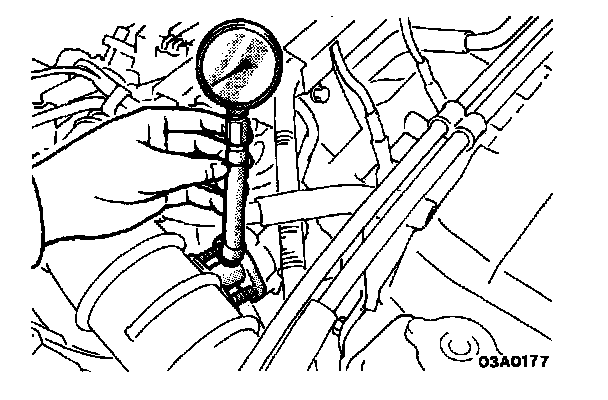
(9) Measure the fuel pressure when the vacuum hose is connected to the pressure regulator:
Standard value: Approx. 270 kPa (38 psi) at curb idle
(10) Race the engine repeatedly in two or three series. Then check that the fuel pressure does not fall when the engine is running at idle.
(11) Check to be sure that there is fuel pressure in the return hose also (by gently pressing the fuel return hose with a finger while repeatedly racing the engine).
NOTE There will be no fuel pressure in the return hose when the volume of fuel flow is not sufficient.
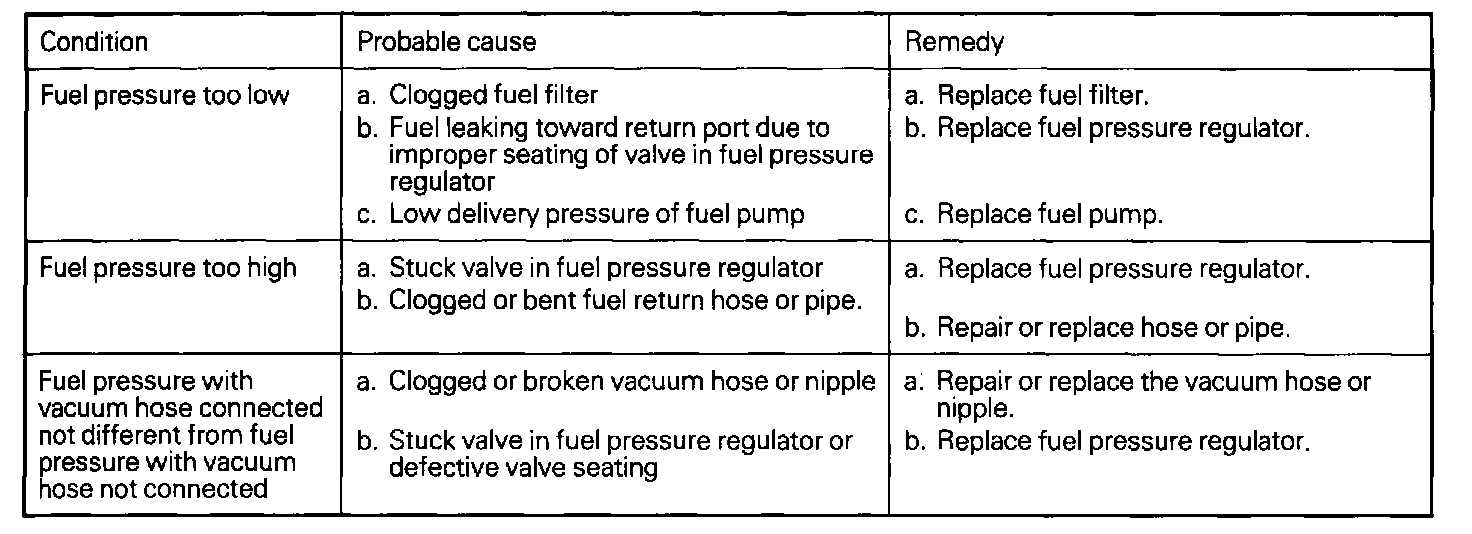
(12) If the results of the measurements made in steps (8) and (9) above are not within the standard value, use the table below to determine the probable cause, and then make the necessary repair.
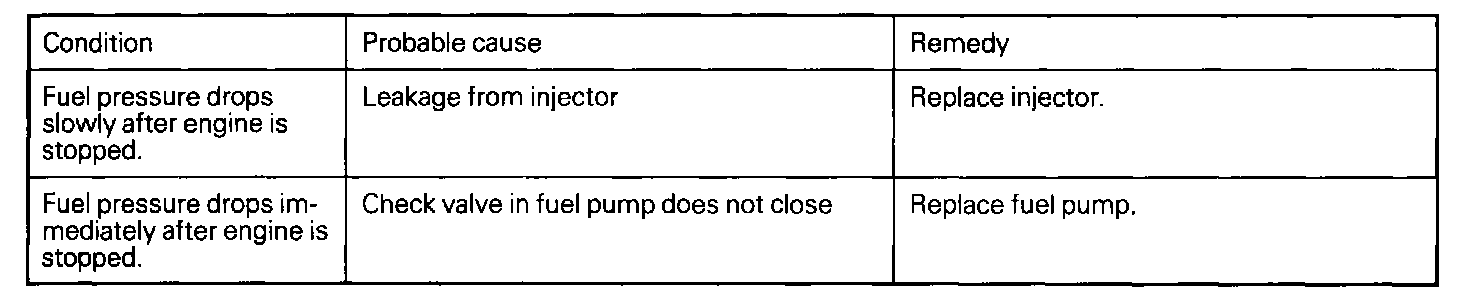
(13) Stop the engine and check for change in fuel pressure gauge indication, which should not drop.
If the gauge indication drops, observe the rate of drop and determine and remove the causes according to the following table.
(14) Reduce the fuel pressure in the fuel line.
(15) Disconnect the high pressure fuel hose and remove the fuel pressure gauge from the deliverv pipe.
CAUTION Cover the hose connection with shop towel to prevent splash of fuel that could be caused by residual pressure in the fuel pipe line.
(16) Mount a new 0-ring in the groove at the end of the high pressure fuel hose.
(17) Connect the high pressure fuel hose to the delivery pipe, and tighten the screws to the specified torque.
(18) Check for fuel leaks.
(1) Apply battery Voltage to the fuel pump check terminal to operate the fuel pump.
(2) With fuel pressure acting, check the fuel line for leaks.