Knock Detector & Control Unit Information
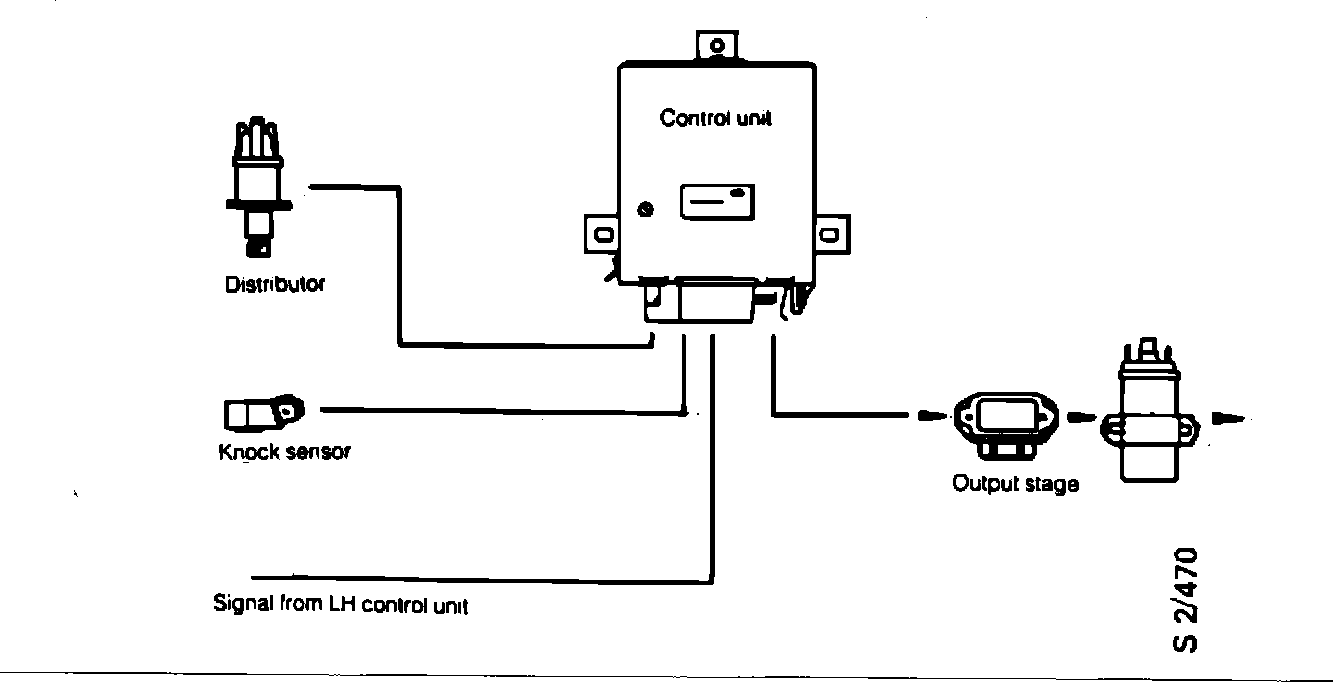
Principle of Operation:
For starting of the engine, the timing is always 5~ BTDC and this remains unaltered until the engine speed has increased to about 700 rpm. At speeds greater than 700 rpm the ignition system adjusts the timing automatically according to preset data in the memory of the electronic control unit. The timing is adjusted to suit the load on the engine, the engine speed and any knocking tendencies, with the ignition advance being varied between 5~ and 22~ BTDC.
The knocking-related ignition timing is controlled individually for each cylinder. Thus, the ignition advance may vary between cylinders.
The load-related timing is the same for all four cylinders.
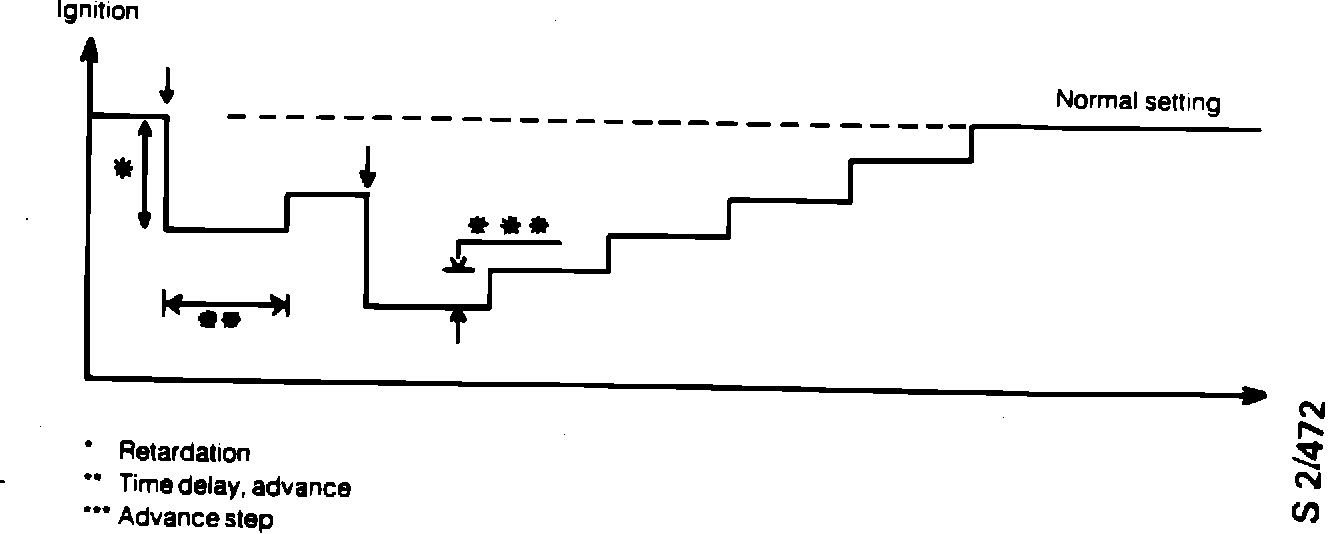
Knocking-Related Control:
When knocking occurs, the ignition in the cylinder concerned is retarded in steps of approx. 3~ until the knocking ceases or until the timing has been retarded by a total of 13~. The system will return to normal ignition advance in steps of 0.35~ for each speed-related period.
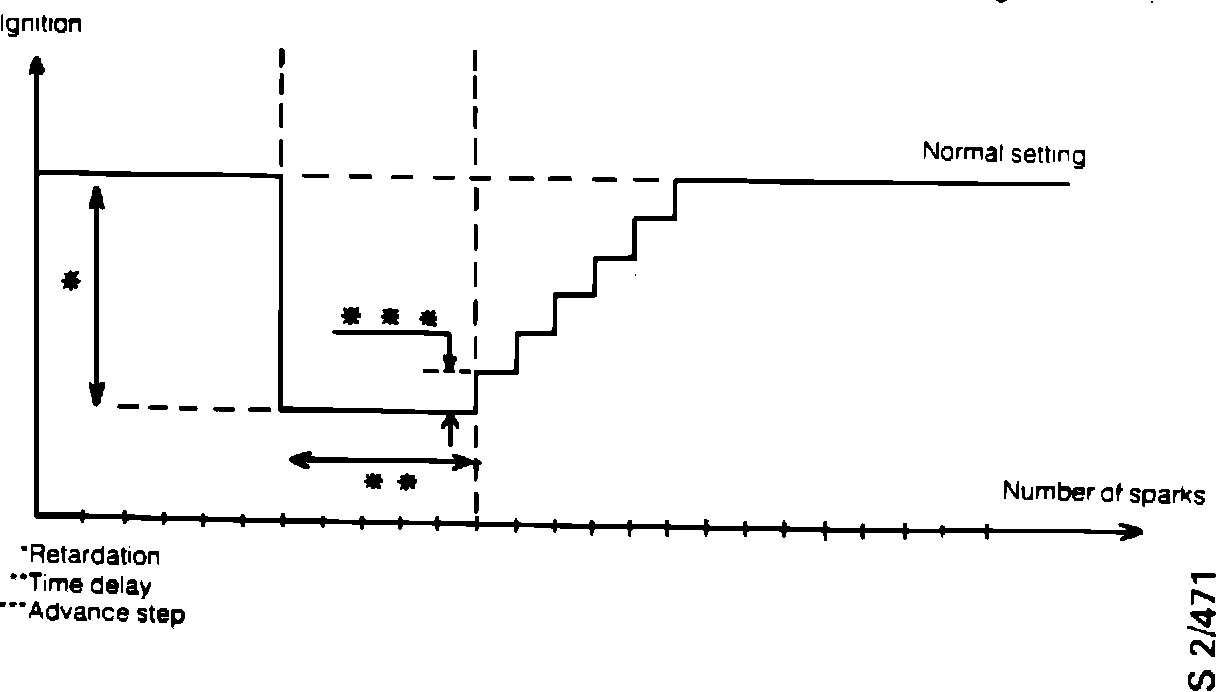
Load-Related Control:
When the engine load exceeds the preset value stored in the memory of the electronic control unit, the timing is retarded by approx. 6~ for all four cylinders simultaneously. The return to normal timing occurs in steps of 0.7~ per engine revolution after the load on the engine has stopped increasing.
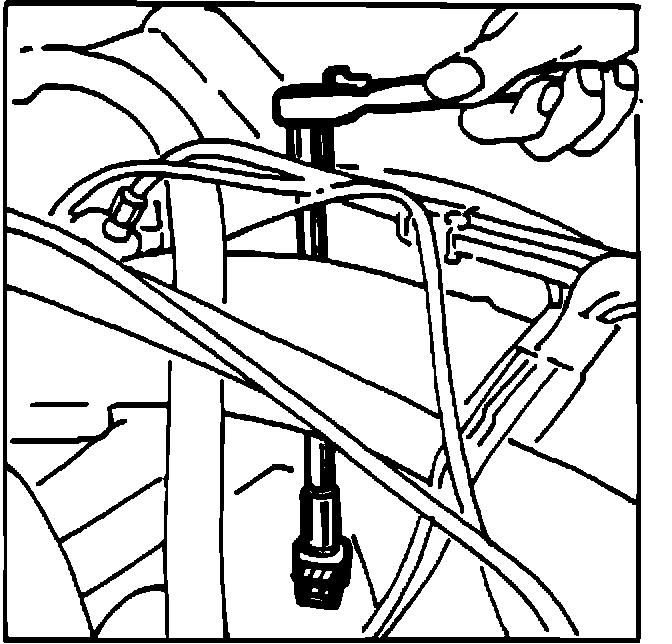
The Knock Detector:
The knock detector converts knock signals from the engine into electrical signals which are transmitted to the electronic control unit. The knock detector is fitted on the left side of the engine block, underneath the inlet manifold.
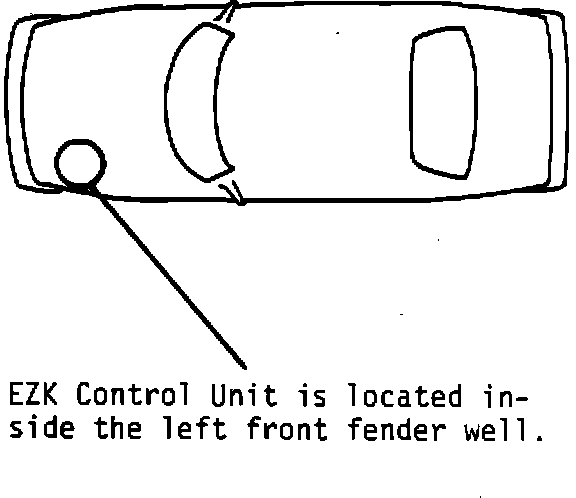
The Electronic Control Unit:
The electronic control unit receives signals from the knock detector, the control unit for the LH system and the Hall transmitter in the distributor. The electronic control unit analyzes these signals and compares them with preset values stored in its memory. The control unit then adjusts the timing by sending signals to the output stage which breaks the primary circuit of the coil and initiates a spark.