Technical Data, Service & Engine

TECHNICAL DATA
Vehicle Identification Number - The Federally required 17 character VIN incorporates a new designator for model year 1987 - "H". This new designator is also used in the engine serial number to indicate the model year. Other characters are used in the VIN to indicate the gearbox and engine type as they relate to the naturally-aspirated 9000S and cars with the ZF automatic.
Gasoline-Methanol Fuel Blends - From model year 1987, gasoline-methanol fuel blends are approved for use in Saab engines and fuel systems providing that the ratio of methanol-to-gasoline does not exceed 5% and that the blend contains a co-solvent such as TBA in amounts equal to the methanol-to-gasoline percentage blend ratio.
The recommendation for gasoline-ethanol blends remains as stated in the Owner's Manual.
Towing By Commercial Tow Truck - The introduction of the automatic transmission alters the towing recommendation slightly, for 1987. When towing from the rear with sling type equipment it's recommended that wheel dollies be placed under the front wheels to prevent damage to the automatic transmission. Otherwise the car can be towed the same as last year, meaning sling type equipment is allowed when towing from the rear but only wheel lift equipment is permitted when towing from the front. Sling type lifts can cause damage to the front bumpers, spoiler and fog lights, if so equipped.
Running-In of New Brake Linings - Please advise new owners that a running-in or break-in period o 90 miles of city driving or 300 miles of highway driving is recommended for the brake system. Proper break-in (avoid hard braking) will extend the service life of the brakes as well as reducing the possibility of brake noise later on.
The Owner's Manual also advises this and the break-in period is also applicable for replacement pads.
Recommended Fuel - To avoid deposit formation on the fuel injectors which can adversely affect performance and cause driveability problems after a cold start, use only quality gasolines which are blended with detergent additives. Most major brands will advertise this fact if their gasolines are so treated.
SERVICE
Service Intervals - The oil change interval for the 9000 Turbo has been extended to 7,500 miles in normal service. A new water-cooled turbocharger/center housing which reduces the oil temperature both during hard driving and during critical "hot soak" periods is introduced.
The Severe Service recommendation for engine oil remains in effect for all versions (every 3750 miles).
The Warranties/Service Records Booklet reflects this change and is well marked with the special model applications. Use the coupons and checklists given in this booklet when performing services. Be sure to stamp the correct page afterwards with your dealer stamp and signature.
The ZF automatic requires an oil and filter change at intervals of 30,000 miles (15,000 miles in severe service). Use only Dexron II for changes and when topping up.
Tire Pressures - A new 205/55 VR 15 tire is introduced on the 9000 Turbo. This tire requires a slightly different normal load specification compared to the 195/60 HR 15. Front & Rear
205/55 VR15 Normal Load..............................30 psi Cold High Speed...............................36 psi Cold
195/60 HR15 Normal Load..............................32 psi Cold High Speed...............................36 psi Cold

Transmission Oil Dipstick - Early production models with the manual transmission will use the engine oil dipstick to check the oil level in the gearbox. The engine oil dipstick is marked separately for both the engine and gearbox.
Remove the filler plug and insert the stick so that the slot lines up with the sealing surface for the the plug as shown in the drawing. The oil level should be between the marks.
Later models have the filler hole moved to the front of the car. An integral dipstick is supplied at the filler cap for the hole. The oil levels should be between the MAX and MIN marks on the dipstick.
Use only 10W-30 or 10W-40 when topping up. There is no oil change recommendation for the 5-speed manual transmission.
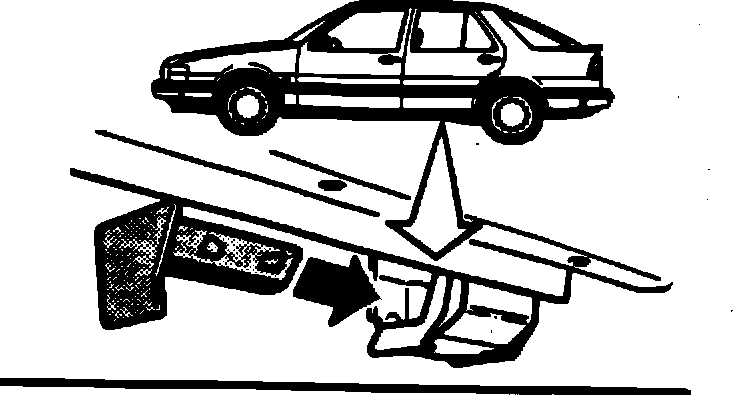
PDI Information - A separate S.I. has been issued on this subject, however we would again like to point out the addition of new supplementary tie-down hooks that may be attached at the rear jacking points. These must be removed at the PDI and the splash guards located in the glove box be installed.
ENGINE
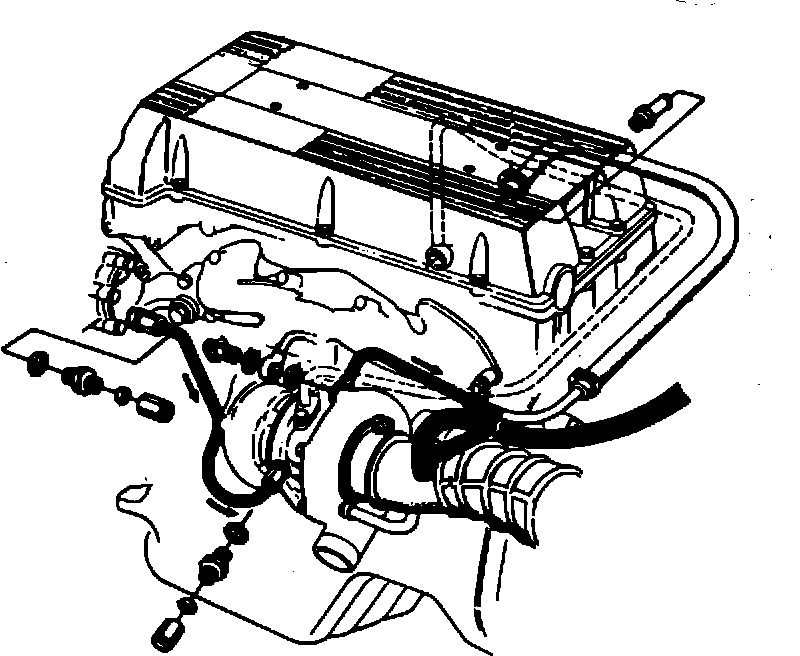
New Turbocharger - A new turbocharger with a water-cooled center section has been introduced on the 9000 Turbo. This feature dramatically reduces the oil temperature both during hard driving and during critical "hot soak" periods after the engine is shut off.
The lower oil temperature results in improved turbocharger life and allows the oil change interval to be extended to 7,500 miles. The intermediate oil change is now eliminated on the 9000 Turbo (except in the case of severe usage).
The cooling of the center housing is fully integrated with the rest of the engine cooling system and a certain amount of "siphoning" takes place after the engine is shut off, providing further cooling.
Naturally-Aspirated 16 Valve Engine - The naturally-aspirated 16 valve engine has been introduced into the new 9000S. The new engine is very similar to the engine in the 900S in that it is equipped with the innovative EZK ignition with knock detector system. In conjunction with the "Check Engine" light in the dash cluster, this system has self-diagnostic capabilities.
The "Check Engine" light can also indicate a failure in certain components of the fuel system.
The oil change interval with this model is also 7,500 miles in normal service.