Clutch: Adjustments
CLUTCH PEDAL INSPECTION
Move the clutch pedal pads in the lateral direction with a force of approximately 10 N (1 kgf, 2 lbf) to ensure the pedal deflection is in specified range. If excessive deflection is noted, replace the bushings with new ones.
Deflection of clutch pedal:
Service limit
5.0 mm (0.197 in) or less
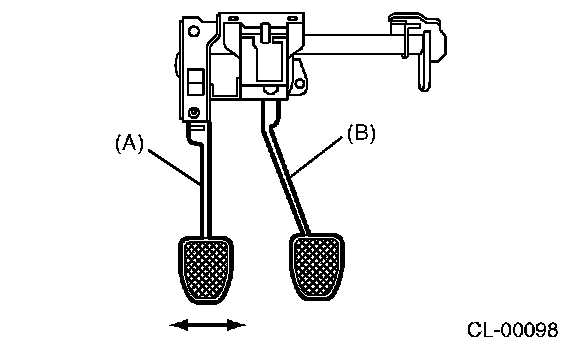
(A) Clutch pedal
(B) Brake pedal
ADJUSTMENT
1) Measure the full stroke amount of clutch pedal.
NOTE:
- Measure the length between the seat cushion front end and center portion of clutch pedal.
- Slide the seat at seventh notch from the first notch.
Specified clutch pedal full stroke A:
Non-turbo model:
130-135 mm (5.12-5.31 in)
Turbo model:
135 - 140 mm (5.31-5.51 in)
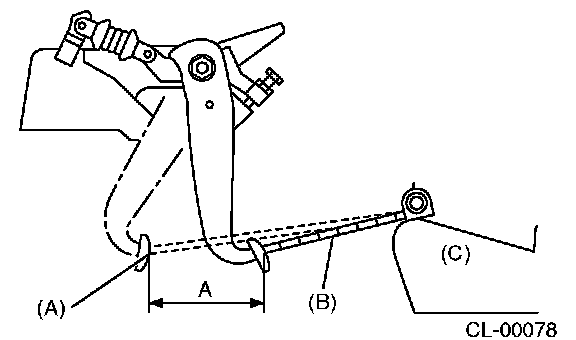
(A) Clutch pedal (Full stroke condition)
(B) Scale
(C) Seat
2) If the clutch pedal stroke is out of specification, loosen the clutch switch lock nut to adjust.
Tightening torque (Clutch switch lock nut):
8 N.m (0.8 kgf-m, 5.8 ft-lb)
3) Loosen the push rod lock nut.
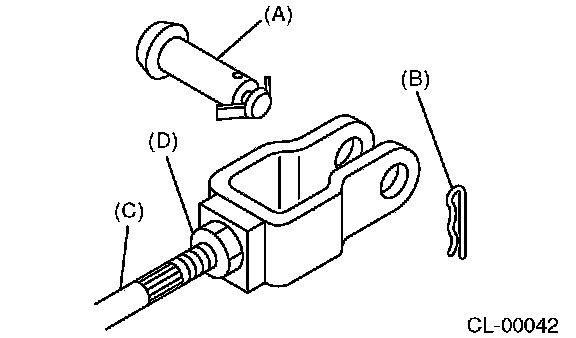
(A) Clevis pin
(B) Snap pin
(C) Push rod
(D) Push rod lock nut
4) Turn the push rod to adjust.
(1) Ensure that the clutch pedal contacts clutch switch, when releasing the clutch pedal.
(2) Ensure that the clutch pedal contacts clutch pedal bracket stopper, when fully depressing the clutch pedal.
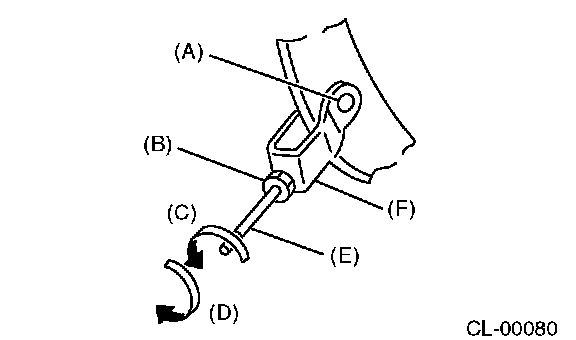
(A) Clevis hole
(B) Push rod lock nut
(C) Shortening direction
(D) Lengthening direction
(E) Push rod
(F) U shaped bracket
5) Turn the push rod counterclockwise to shorten until clearance is made at clutch switch.
(A) Clutch switch
(B) Stopper
(C) Clearance
6) Turn the push rod clockwise to lengthen until clutch pedal contacts to clutch switch.
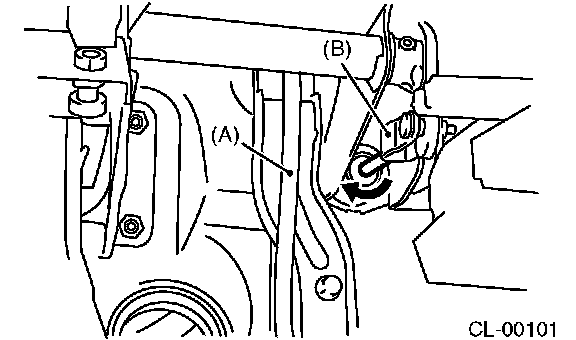
7) Turn the push rod further 2700 counterclockwise to shorten (arrow direction as shown in the figure).
(A) Accelerator pedal
(B) Clevis
8) Move the clevis pin in lateral direction to ensure it moves smoothly.
9) Tighten the push rod lock nut.
Tightening torque:
10 N.m (1.0 kgf-m, 7.2 ft4b)
10) Depress and release the clutch pedal two or three times to ensure that clutch pedal and release fork operate smoothly. If the clutch pedal and release fork do not operate smoothly, bleed air from the clutch hydraulic system.
11) Measure the clutch pedal full stroke length again to ensure that it is within specifications. If it is not, repeat adjustment procedures again from the beginning.
Specified clutch pedal full stroke:
Non-turbo model:
130- 135mm(5.12-5.31 in)
Turbo model:
135-140 mm (5.31-5.51 in)
12) Move the clevis pin to the left and then to the right. It should move without resistance while it is rattling. If resistance is felt, repeat adjustment procedures again from the beginning.
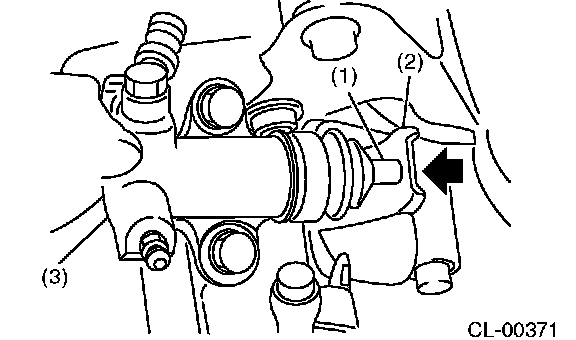
13) Push the release lever until operating cylinder push rod retracts. Ensure that the clutch fluid level in reservoir tank increases. If the clutch fluid level increases, hydraulic clutch is properly adjusted; if the fluid level does not increase or push rod does not retract, replace the master cylinder with a new one.
(1) Push rod
(2) Release lever
(3) Operating cylinder
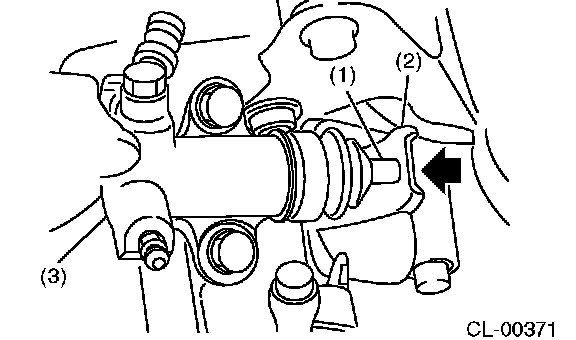
14) Push the release lever until the operating cylinder push rod retracts. Check that the clutch fluid level in reservoir tank increases.
(1) Push rod
(2) Release lever
(3) Operating cylinder
15) If the clutch fluid level increases, hydraulic clutch play is correct.
16) If the clutch fluid level does not increase or push rod does not retract, clutch pedal must be readjusted.
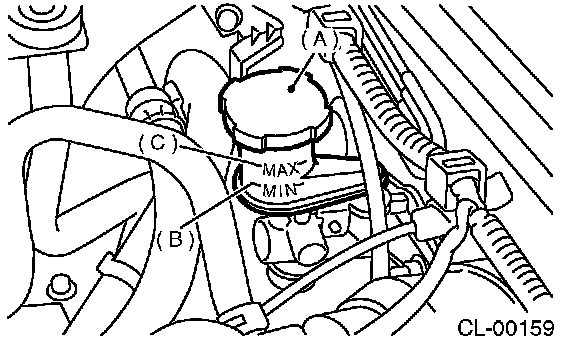
17) Check the fluid level on the outside of the reservoir tank. If the level is below "MIN", add clutch fluid to bring it up to "MAX".
Recommended clutch fluid:
FMVSS No.116, fresh DOT 3 or DOT 4 brake fluid
(A) Reservoir tank
(B) Min. level
(C) Max level