Brake and Clutch System, Changing Brake Fluid
Brake and Clutch System, Changing Brake Fluid
Notes on application and safety => [ Application Information and Safety Precautions ].
Brake fluid specification => [ Brake Fluid Specifications ].
Work procedure, change brake fluid => [ Brake Fluid, Changing ].
Application Information and Safety Precautions
• From model year 2006, a new brake fluid is introduced.
• The new brake fluid can also be used for older vehicles.
• New brake fluid can be mixed with previous brake fluid.
CAUTION!
• Brake fluid must never come into contact with fluids containing mineral oils (oil, gas, cleaning solutions). Oils containing minerals damage seals and sleeves on brake systems.
• Brake fluid is poisonous. Also, do not let brake fluid come into contact with paintwork.
• Brake fluid is hygroscopic, which means that it absorbs moisture from the air. Always store brake fluid in air-tight containers.
• Wash off brake fluid spillage using plenty of water.
• Do not reuse used / extracted brake fluid!
• Observe waste disposal regulations!
Brake Fluid Specifications
Permitted specifications:
• Brake fluid corresponding to US standard FMVSS 116 DOT 4 (previous brake fluid).
• Brake fluid conforming to VW norm VW 501 14 (new brake fluid).
Brake Fluid, Changing
Special tools, testers and auxiliary items required
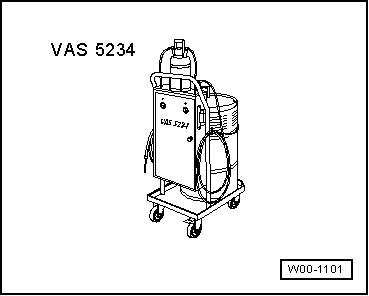
• Brake charger/bleeder unit (VAS 5234)
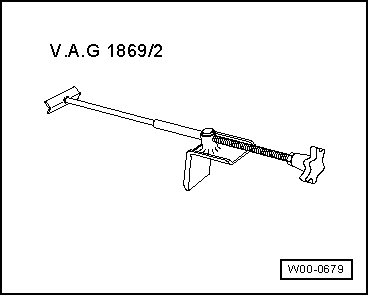
Brake pedal depressor (V.A.G 1869/2)
=> Observe operating instructions for (VAS 5234)!
- Set the correct pressure using the brake filler and bleeder unit (VAS 5234): Chassis, Brake Systems=> Chassis, Brake Systems 47 Brake System, BleedingBrake System, Bleeding
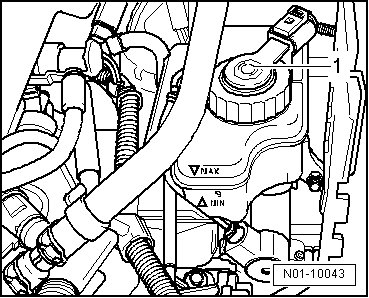
- Unscrew brake fluid reservoir cap - 1 -.
- Extract as much brake fluid as possible using intake hose Brake charger/bleeding unit (VAS 5234).
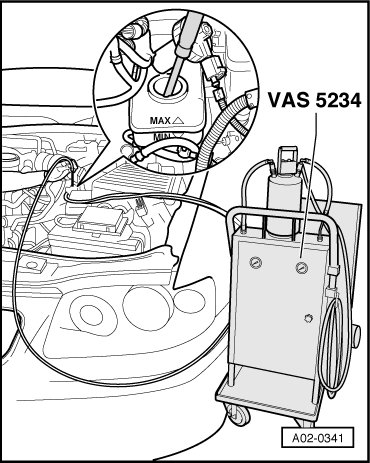
• The strainer in the brake fluid reservoir must not be removed.
CAUTION!
Extracted brake fluid must not be re-used!
- Screw adapter - 1 - onto brake fluid reservoir.
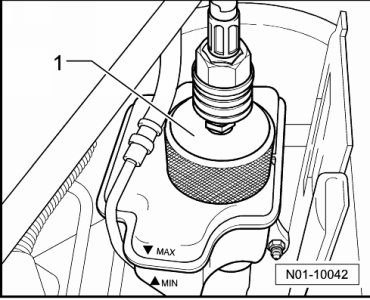
- Install brake pedal depressor (V.A.G 1869/2) between driver's seat and brake pedal and apply tension.
- Connect charger hose of brake charger/bleeder unit (VAS 5234) to adapter.
for vehicles with manual transmission
- Procedure for changing brake fluid in the clutch system: "Transmission"=> Transmission 30 Clutch System, Bleeding "Clutch System, Bleeding".
continue for all vehicles
- Connect collector bottle bleeder hose - 1 - to left front bleeder screw, open bleed screw and allow the corresponding quantity to flow out (see table). Close bleeder screw. Torque: Chassis, Brake System=> Chassis, Brake System 47 Brake Caliper, ServicingBrake Caliper, Servicing
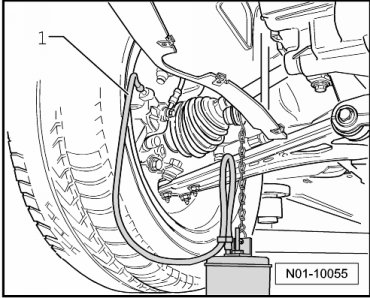
Repeat work procedure on right side of vehicle at front.
- Unscrew both wheels at rear axle in order to reach the bleed screws.
- Pull cover caps off brake caliper bleeder screws
- Connect collector bottle bleeder hose - 1 - to left rear bleeder screw.
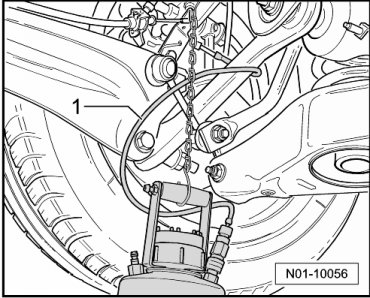
- Open bleeder screw and let the corresponding amount of brake fluid (see table) flow out. Close bleeder screw. Torque: Chassis, Brake System=> Chassis, Brake System 47 Brake Caliper, Rear, ServicingBrake Caliper, Rear, Servicing
• Use a suitable bleed hose. It must seat tightly on bleed screw so that no air can enter brake system.
Repeat work procedure on right side of vehicle at rear.
Table Sequence/brake fluid quantity

Total amount: approximately 1.15 Liters
- Install cover caps on brake caliper bleeder screws.
- Move filler lever on brake charger/bleeder unit (VAS 5234) to position "B" (see operating instructions).
- Take filler hose off adapter.
- Unscrew adapter from brake fluid reservoir.
- Check brake fluid level and top off if necessary.
- Screw in cap - 1 - for brake fluid reservoir.
- Remove brake pedal depressor.
- Press clutch pedal several times.
- Check pedal pressure and brake pedal free play. Free play: Max. 1/3 of pedal travel